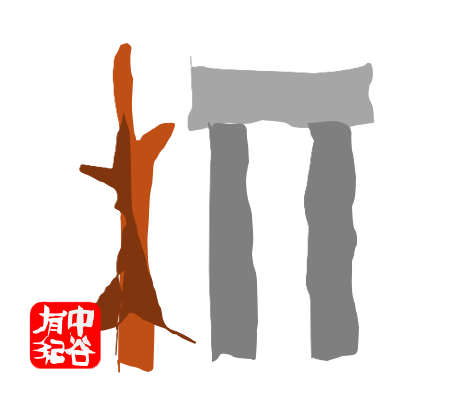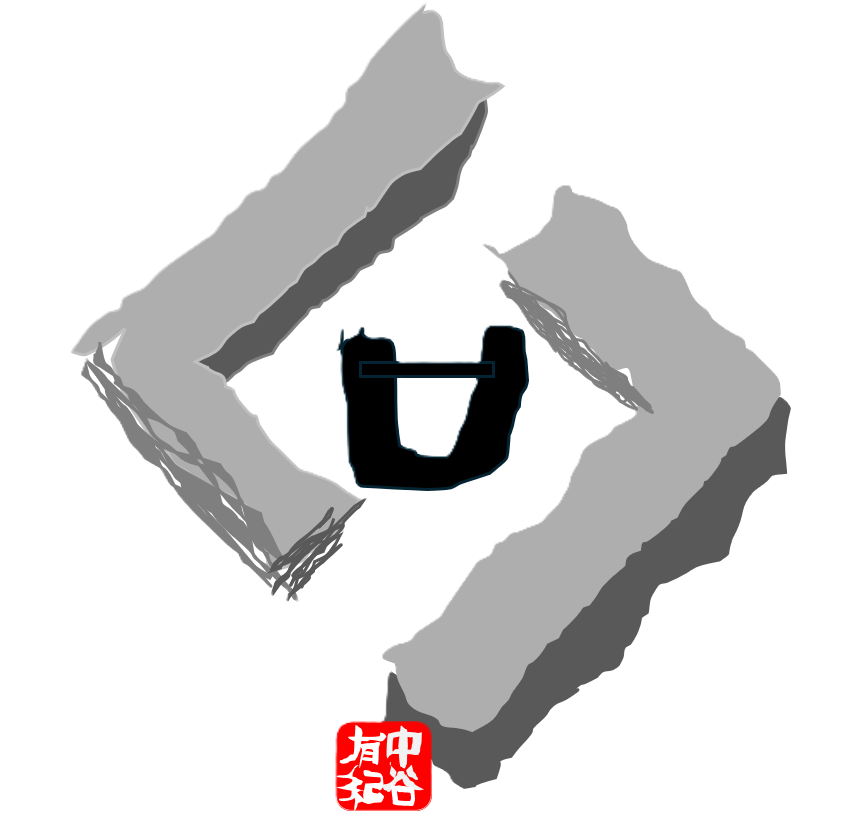
This kanji depicts a mouth enclosed by corner brackets. Therefore, it represents a group of words set apart, meaning a ‘phrase’.
枠でぐるりと小さく区切られた空間の中に、「口」がすっぽりと収まっている様子を描いた漢字です。言葉のひとかたまりを短く区切ったものを表し、「く(句・語句・俳句)」という意味になりました。
The short story of Kanji pictures
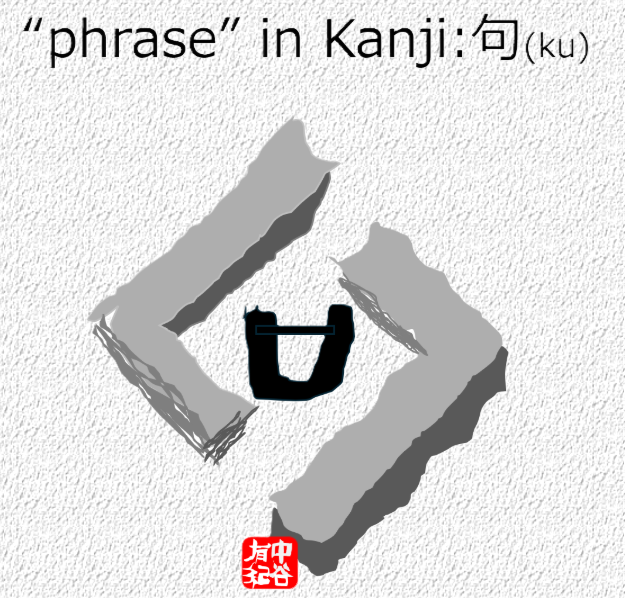
This kanji depicts a mouth enclosed by corner brackets. Therefore, it represents a group of words set apart, meaning a ‘phrase’.
枠でぐるりと小さく区切られた空間の中に、「口」がすっぽりと収まっている様子を描いた漢字です。言葉のひとかたまりを短く区切ったものを表し、「く(句・語句・俳句)」という意味になりました。
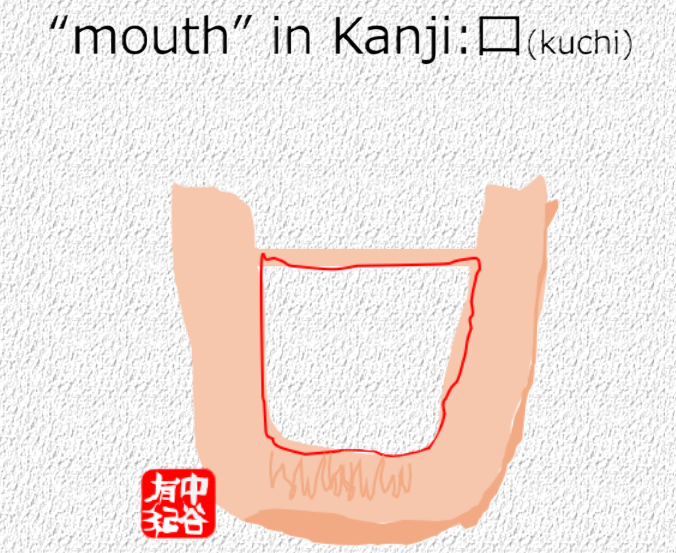

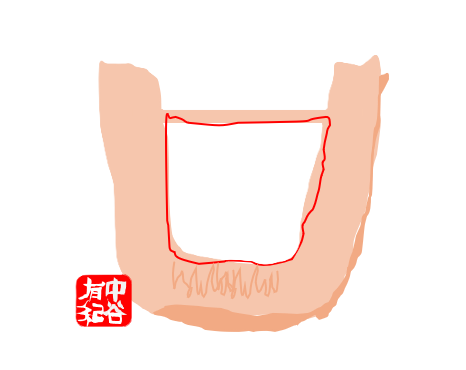
As you can see, this kanji simply depicts the shape of a human mouth.
人間の顔についている「くち(口)」をぽかんと開けた形を、四角い輪郭でシンプルにそのまま描いた漢字です。
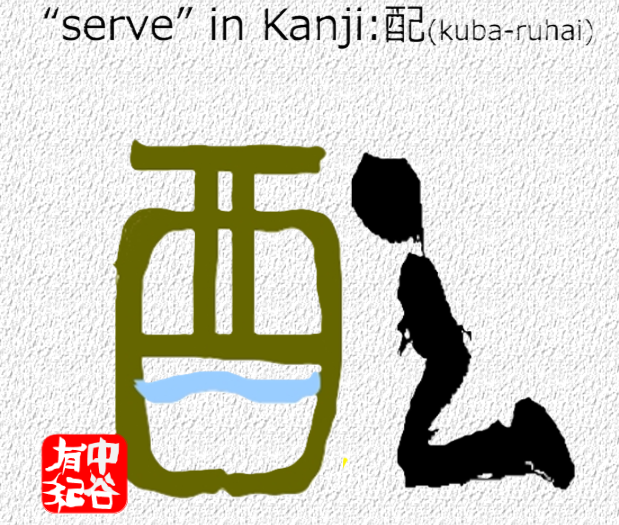

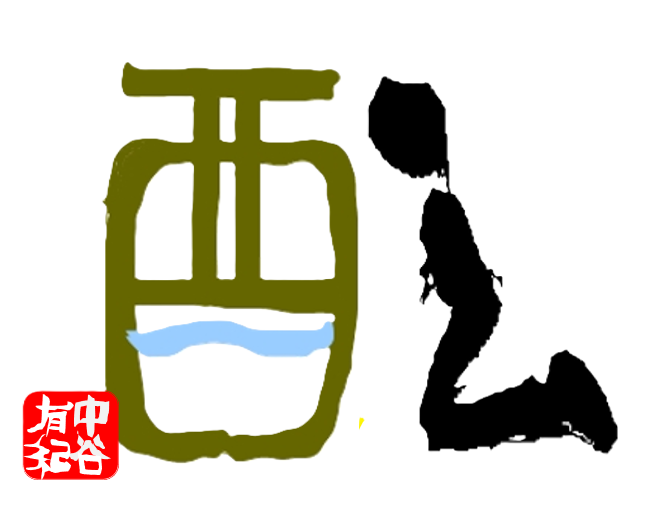
This kanji consists of two parts. On the left is a bottle of sake, and on the right is a person kneeling down to serve it. Therefore, this kanji carries the meaning of ‘serving’ or ‘offering’ something to others.
この漢字は、左側はお酒が入った壺(酉)、右側はその前にお行儀よくひざまずいて給仕をしている人の姿を描いています。お酒を人々に順序よく注ぎ分けて配る様子から、「くばる(配る・分配・心配)」という意味を表します。
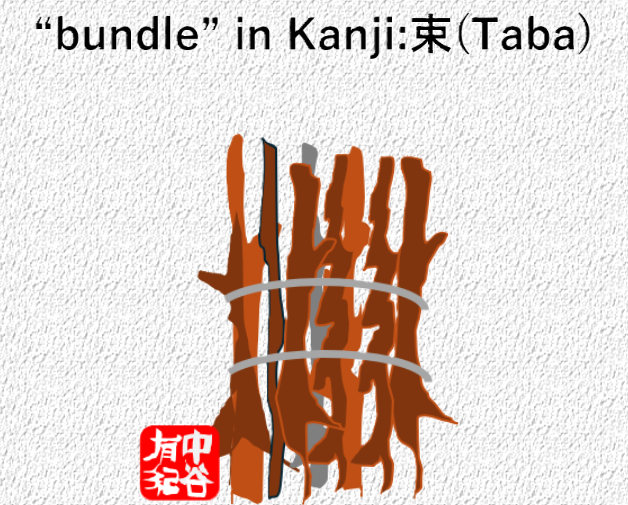

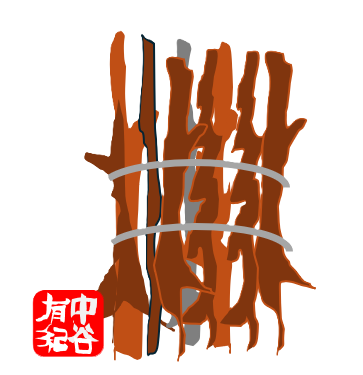
This Kanji character beautifully mimics a scene from ancient daily life.
The lines visually depict a cluster of gathered firewood being tightly tied together with a rope. Therefore, this character directly holds the meaning “to bundle,” “to tie together,” or “a bunch.” It is a beautiful, rustic snapshot of history frozen inside a single word.
集めたたくさんの薪(まき)を、縄でぐるっと固く縛り上げた昔の生活の様子をそのまま描いた漢字です。物をひとつにまとめる「束ねる(たばねる・むすぶ)」、あるいは「たば(一束)」という意味を表します。
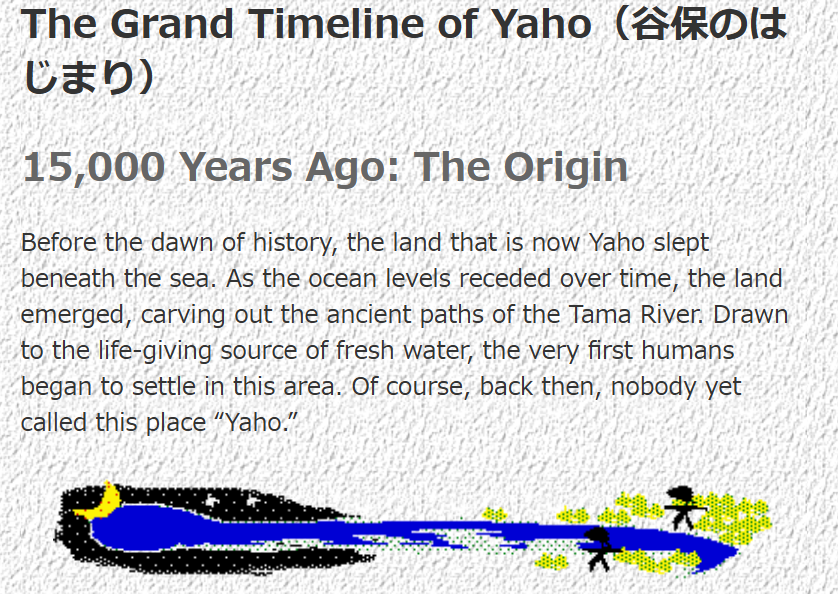
Before the dawn of history, the land that is now Yaho slept beneath the sea. As the ocean levels receded over time, the land emerged, carving out the ancient paths of the Tama River. Drawn to the life-giving source of fresh water, the very first humans began to settle in this area. Of course, back then, nobody yet called this place “Yaho.”

Human ingenuity flourished as ancient people began crafting primitive stone tools, including finely knifed stones. This era marked a revolutionary change in lifestyle: the birth of early villages where people chose to live and work together. Today, archaeologists still uncover these stone tools and the remains of pit-dwellings deep within the earth of Yaho, standing as silent witnesses to this ancient community.

The introduction of rice cultivation fundamentally transformed society. As people mastered rice farming, the concept of “wealth” was born, tied directly to the size of one’s harvest. This economic shift created social classes, leading to the rise of influential local leaders who governed and protected the growing community.

History records that it was during the Kamakura era that people first began using the name “YA-HO.” Legends suggest that a magnificent local palace once stood around what is now Joyama Park. The sacred Yabo Tenmangu Shrine, which still watches over the town today, was established during this deeply spiritual medieval era.
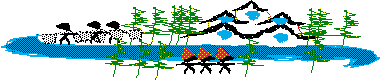
The town landscape shifted dramatically with the construction of the Koshu-kaido, a major highway built just north of Yaho. Bustling houses and vibrant shops quickly opened along the busy roadside. With this development, Yaho Village expanded its borders from the banks of the Tama River far up into the north.

Politically, a new era began. Three neighboring settlements—Yaho, Aoyagi, and Ishida—merged into one unified political entity known as “Yaho Village.” Shortly thereafter, a major administrative shift took place, and the entire Yaho region was officially transferred from Kanagawa Prefecture to become a proud part of Tokyo.
A groundbreaking project transformed the northern part of Yaho Village, led by the Hakone-Tochi Development Company. Inspired by modern European city planning, particularly in Germany, they envisioned a premium educational town from scratch. To achieve this, they successfully negotiated with Tokyo Shoka University (now the prestigious Hitotsubashi University) to relocate its campus here, establishing the intellectual heart and symbol of the community.
The naming of this new railway station holds a fascinating double meaning:
- The Geography: The new station sat directly between KOKUbunji station to the east and TachiKAWA station to the west. Taking the initial characters from each neighboring station (KOKU + TACHI), the name “KUNITACHI” was born.
- The Vision: Beyond geography, the name carries a poetic ring in Japanese—Kuni means “country or region” and Tachi means “to stand up or begin.” Thus, the name proudly declared: “A brand-new, ideal region begins from here.”
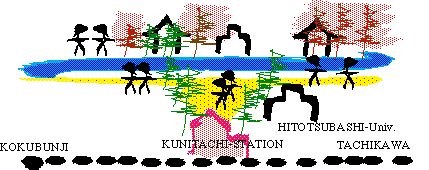
As the population grew, the municipality officially transitioned from a “Village” to a “Town.” This milestone sparked a passionate local debate over what the new town should be called: the historical “Yaho” or the modern “Kunitachi“? Ultimately, “Kunitachi” won the hearts of the people due to its widespread recognition as the beloved station name.
The very next year, in 1952, the residents achieved a monumental victory: the Tokyo Metropolitan Government officially designated the area as a “Bunkyo Chiku” (Special Educational District). This strict legal protection banned the development of nightlife entertainment and businesses unrelated to education, successfully preserving a pure, safe, and beautiful environment for students and children.
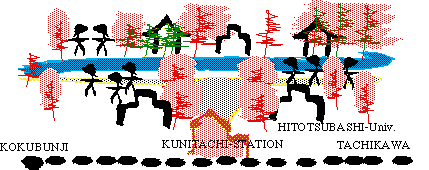
Reaching its modern milestone, Kunitachi officially upgraded its status from a “Town” to a “City,” cementing the elegant, inclusive, and culturally rich community we see today.
This is the grand, interconnected history of Yaho and Kunitachi City—a story sculpted by fresh water, preserved by its people, and inspired by a vision of a better future.


Yaho is a distinct location situated in Japan, Asia, and the wider world.


This ‘TOKKURI’ is a classic piece of Japanese heritage, widely used not only in Yaho but all across Japan during the early Showa era. A Tokkuri is a traditional ceramic bottle made for Sake (Japanese rice wine). This specific type, known as a ‘KAYOI-TOKKURI’ (carrying bottle), functioned like a modern reusable ‘my-bottle’—people would bring it to the local liquor store to get their Sake refilled directly from the barrel, keeping a running tab with the shop.
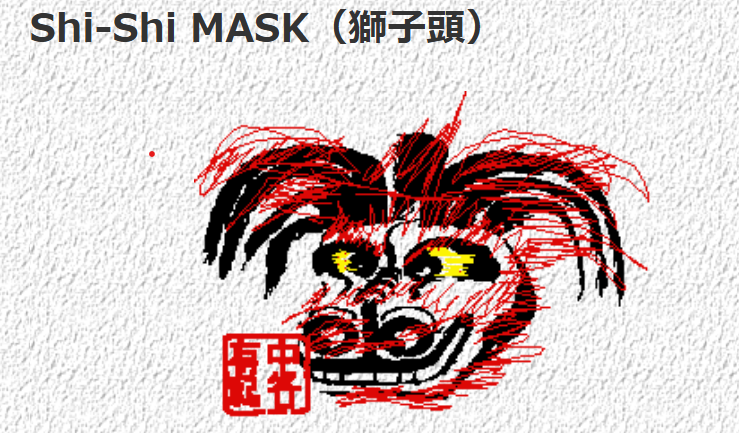

The Kunitachi Museum houses two traditional ‘SHI-SHI’ (lion) masks, which are used during the sacred festivals at Yabo Tenmangu Shrine. When the festival begins, performers don these striking masks and dance wildly to the powerful, hypnotic beat of traditional drums, bringing the ancient ritual to life with incredible energy.


In the old days, massive paper lanterns were used during the grand festivals at Yabo Tenmangu. Each of these magnificent lanterns, proudly inscribed with the characters for ‘YAHO,’ stood about one meter in height! They glowed brilliantly throughout the entire night, beautifully illuminating the dark streets of Yaho with a warm, festive light.