
コンテンツへスキップ
Kanji Japan

Kanji Japan

The short story of Kanji pictures

  • Home
  • Yaho Story
  • Contact

タグ: 口

投稿日: 2026年6月7日2026年8月19日

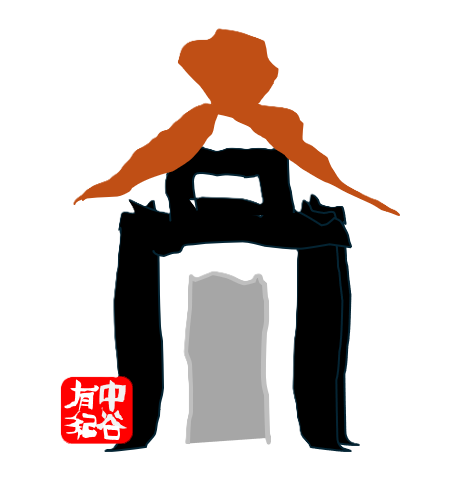
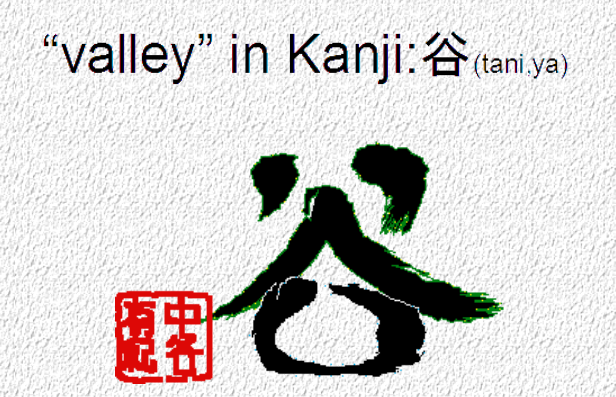
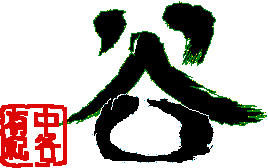
valley(谷)

The upper part of this figure represents a ‘mountain,’ while the markings below depict a cave from which water rises, forming a river. Together, this shape symbolizes a fertile valley—a flat expanse of land embraced by mountains and blessed with plenty of water.
Related Posts

  • The Gorilla Park(谷保第四公園ー通称ゴリラ公園)
  • hole(穴)
  • mountain(山)
  • river(川)
  • water(水)
投稿日: 2026年6月7日2026年8月20日

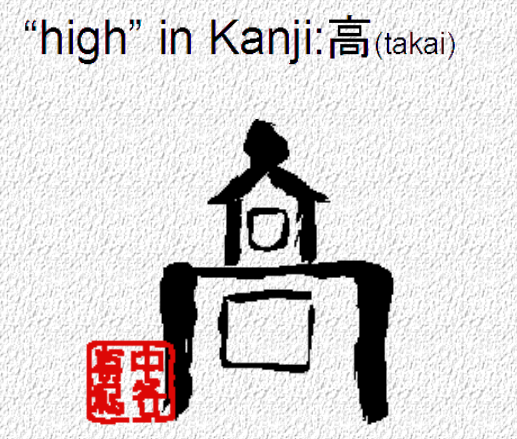
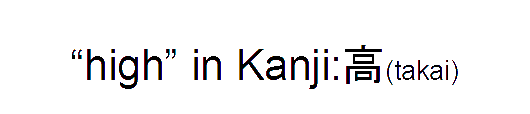
high(高)

You can easily spot the shape of a castle in this figure. Evolving over time, this character has come to represent the concepts of ‘tall’ and ‘high’.

Related Posts

  • Kado-mise(かど店)
  • garage(倉)
  • house(家)
  • over(尚)
投稿日: 2026年6月6日2026年8月20日

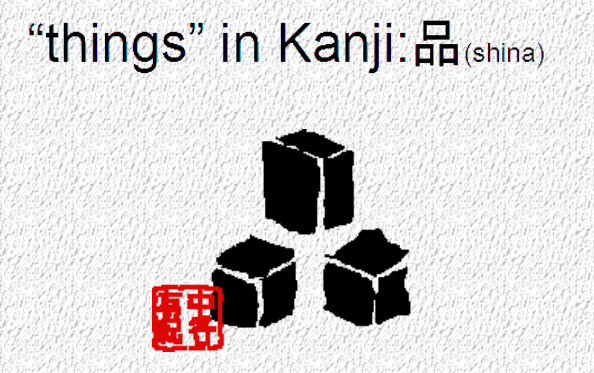
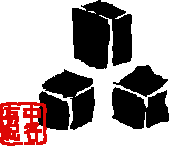
things(品)

Inside this character, you can see a cluster of blocks or boxes. Therefore, it represents the concept of ‘things’ or ‘goods’ in general

Related Posts

  • a few(少)
  • balance(両)
  • each(互)
投稿日: 2026年6月6日2026年8月19日

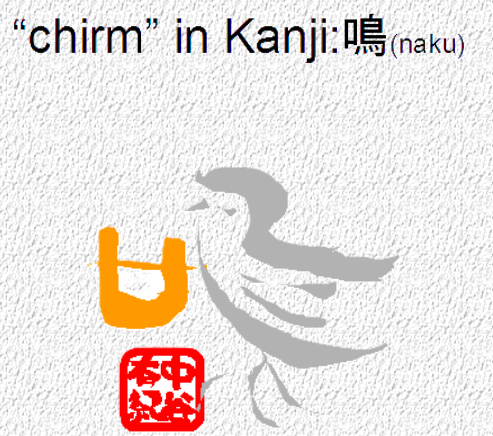
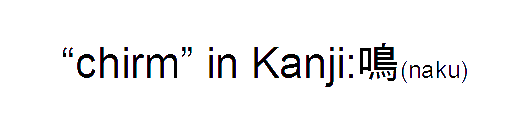
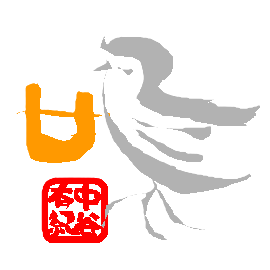
chirm(鳴)

This character depicts a bird chirping with its mouth open. On the left side, you can see the symbol for a mouth. Therefore, this character carries the meaning of ‘chirp’ or ‘cry’.

Related Posts

  • bird(鳥)
  • caution(告)
  • mouth(口)
  • phrase(句)
  • whistle(吹)
  • word(言)
投稿日: 2026年6月5日2026年9月17日

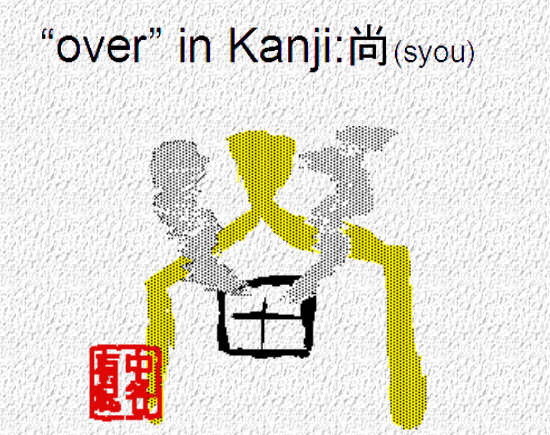
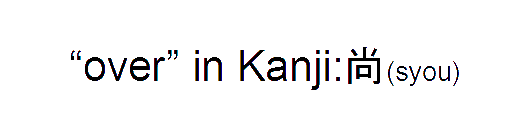
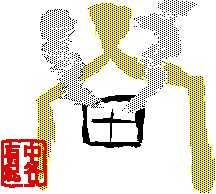
over(尚)

This kanji perfectly captures the image of smoke rising up from a house window. Just as it looks, the energy of moving ‘further upward’ gives this character the meaning of ‘OVER’ or ‘ESTEEMED’ (High status).

Related Posts

  • garage(倉)
  • high(高)
  • house(家)
投稿日: 2026年6月5日2026年8月19日

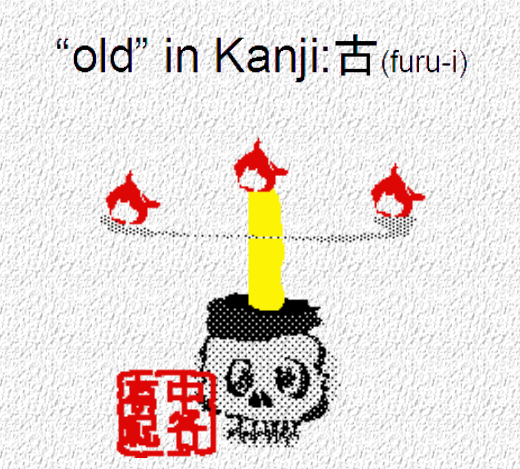
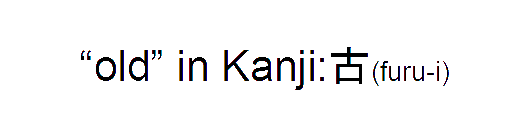
old(古)

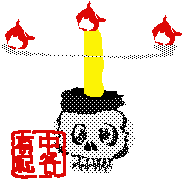
In this character, you can see a sacred fire for ancestors placed upon a human skull. Ancient people believed it was vital to remember what their ancestors had done. This is how this kanji came to mean ‘OLD’ or ‘ANCIENT.’

Related Posts

  • caution(告)
  • fire(火)
  • gereration(世)
  • white(白)
投稿日: 2026年6月5日2026年8月20日

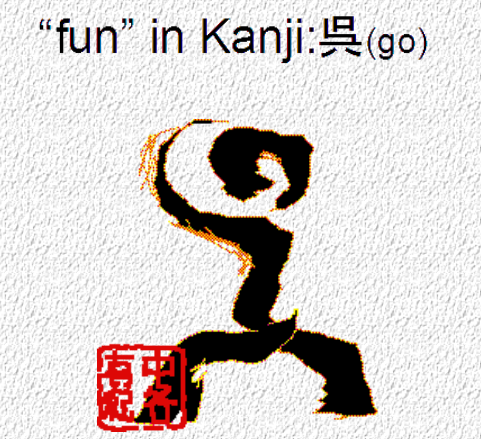
fun(呉)

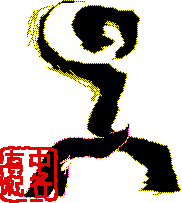
This character combines an overhead tilt of the head with a person dancing and calling out. It symbolizes a noisy, energetic celebration, which is why it was used for the names of ancient kingdoms and regions

Related Posts

  • dance(舞)
  • enjoy(楽)
  • human(人)

投稿のページ送り

前のページ 固定ページ 1 固定ページ 2

検索

B

B

C

C

D

D

E

E

F

F

G

G

H

H

I

I

J

J

K

K

L

L

M

M

N

N

O

O

P

P

Q

Q

R

R

S

S

T

T

U

U

V

V

W

W

X

X

Y

Y

Z

Z


Proudly powered by WordPress