
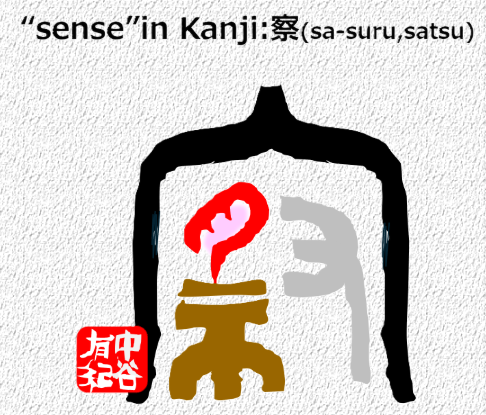

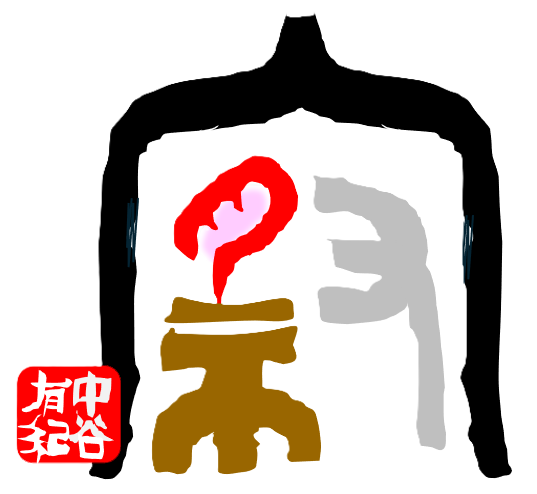
This kanji consists of two parts. At the top is the “house” radical. Inside at the bottom is the “festival” radical, which depicts praying hands and an altar dedicated to the gods. Together, it originally meant to clearly understand and accept a message from the gods within one’s home. Later, it came to mean “to sense” or “to perceive” something.
屋根(宀)の下で、神様を祀る祭壇の前で両手を合わせて祈る(祭)様子を描いた漢字です。家の中で神様から届く微かなお告げを心静かに受け止め、はっきりと感じ取ることから、「おしはかる」「察する(観察・推察)」という意味になりました。