

As you can see, this character beautifully symbolizes a happy, smiling face. True to its radiant form, it directly captures that joyful expression to mean ‘smile’!


As you can see, this character beautifully symbolizes a happy, smiling face. True to its radiant form, it directly captures that joyful expression to mean ‘smile’!


In this figure, you can clearly see a person opening their mouth wide to pour their heart out. This character perfectly captures that expressive action to mean ‘sing’.


In the same way, you can find a bow on the left side of this figure, which symbolizes immense strength. On the right, there is an element resembling an insect. Since insects were also seen as symbols of incredible resilience in ancient times, this character perfectly combines these ideas to mean ‘strong, tough, and mighty’.


Imagine watching a swallow heading up into the sky, gracefully folding and beating its wings from above. Since ancient times in China, the swallow has been a symbol of good fortune and happiness. Because of this auspicious meaning, this character is frequently used in town names and other celebratory places.


When I look at the character for ‘stop,’ I often feel that the imagination of ancient people was not so different from our own. The shape vividly says, ‘You can’t go any further past this fence!’—just like a modern traffic sign. Indeed, this character simply means ‘stop’.


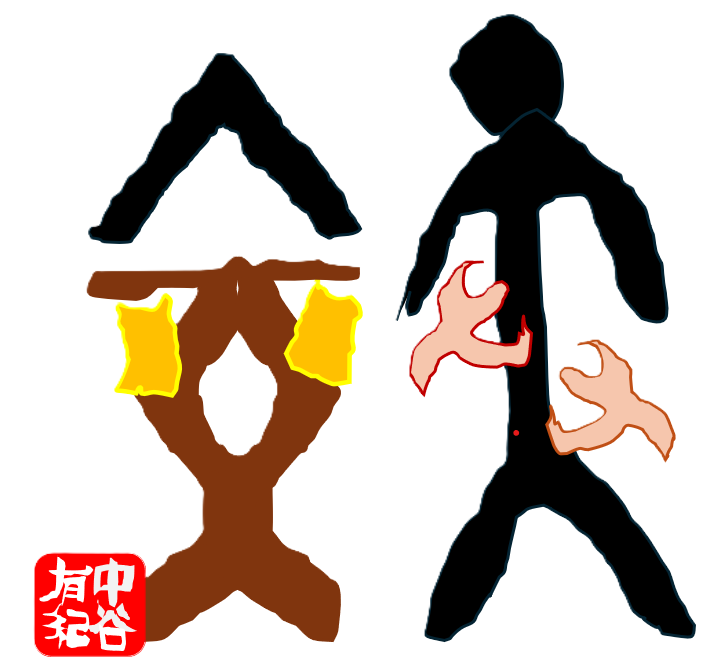
On the left side of this character, you can find a symbol for money or metal, while the right part combines elements signifying a weapon and a king. It reveals a historical truth: in ancient times, the tribe that mastered the art of making steel gained the power to become kings, growing incredibly strong and rich. In world history, steelmaking was first invented in ancient Turkey, and in local lore, a legendary indigenous tribe was famous for holding this advanced knowledge.


This character describes a hand spread wide to measure something. Specifically, the span from a person’s thumb to their index finger was used as a standard baseline, representing a size of about 30 centimeters.


This character describes the rising sun emerging just above the horizon. Because it captures the very beginning of a new day, it is traditionally used to represent the first day of the new year.


The character for the sun is remarkably simple. As you can see, it is represented by nothing more than a basic round mark.