
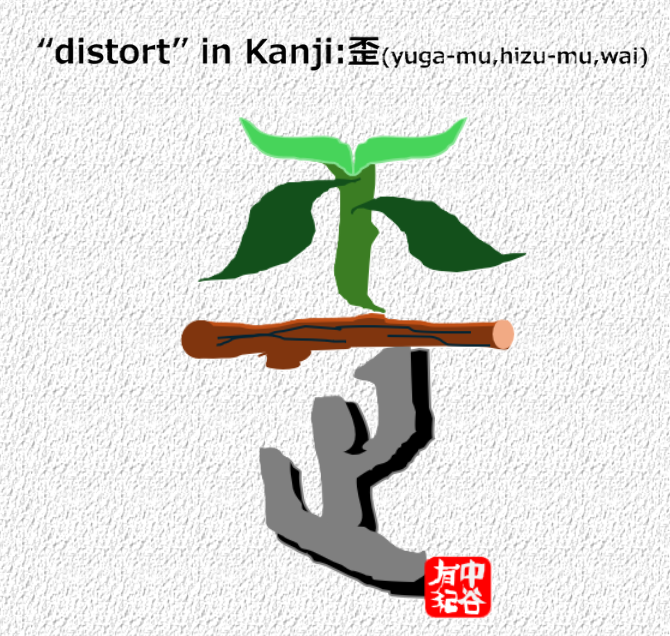

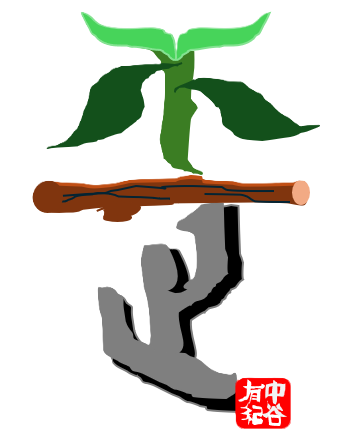
This kanji is composed of two parts. At the top is the negative prefix (“un-” or “non-“), which originally depicted a flower calyx without any petals or fruit, coming to mean “not” or “without.” Below it is the character for “correct” or “right”, which originally represented a footprint halting before a boundary line—symbolizing stopping someone before they head in the wrong direction. Combined, they literally signify “not right” or “non-truth.” By extension, the character came to mean distorting or twisting what is right, perverting the truth, or altering facts so that they become crooked or misleading.
Words & Phrases
- 歪曲(waikyoku):to distort the truth