
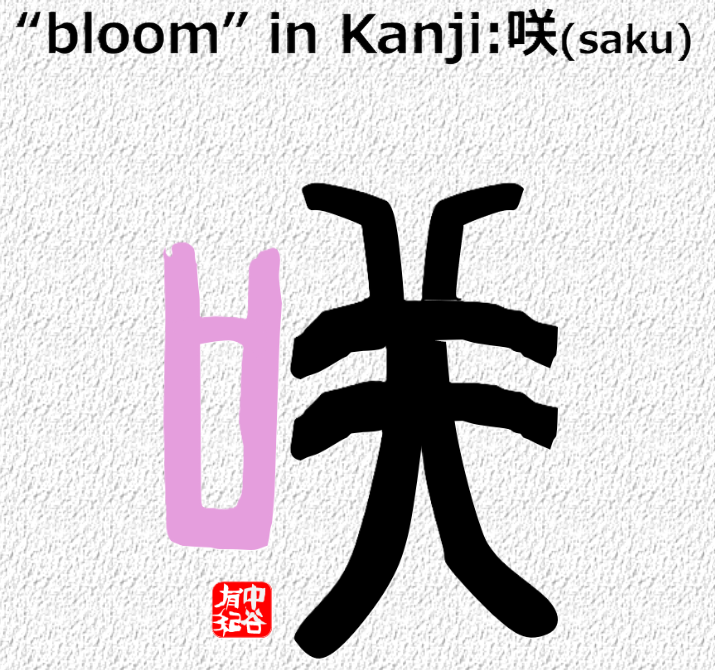

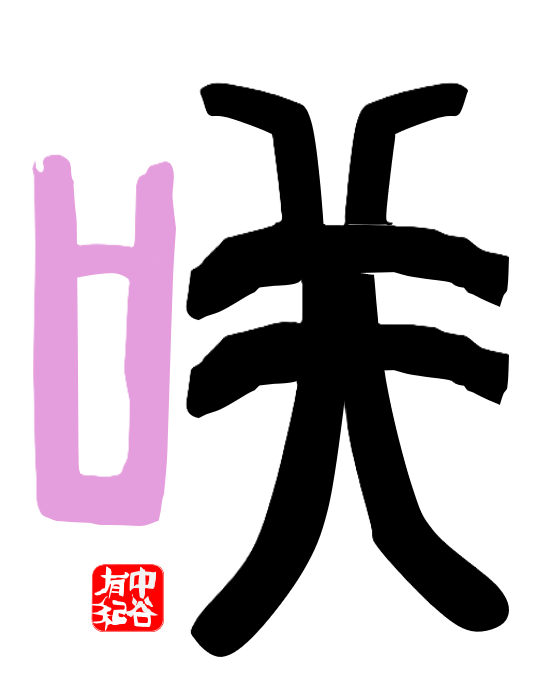
In China, this kanji originally meant ‘to laugh,’ depicting a wide-open mouth (口) beside a woman dancing joyously with her arms and legs outstretched (夭). Later in Japan, people felt the character’s shape resembled flower buds bursting open, leading it to take on the poetic meaning ‘to bloom.’
この漢字はは2つの部分からできています。左側は大きく開いた口を表す「口(くちへん)」、右側は手足を大きく広げて楽しそうに踊る女性の姿を描いた「夭」です。中国ではもともと、口を大きく開けて楽しそうに「わらう(笑う)」という意味を表していました。のちに日本へ伝わると、その文字の形がつぼみがぱっとほころんで開く様子に似ていると捉えられたことから、花などが美しく「さく(咲く・開花する)」という詩的で情緒豊かな意味で使われるようになりました。