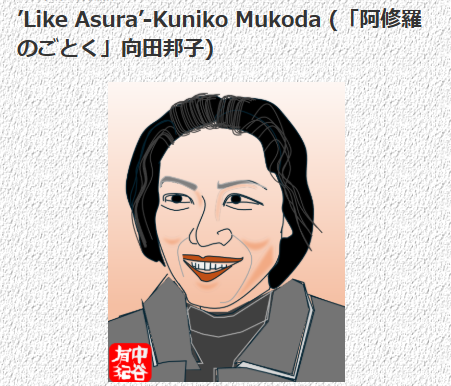
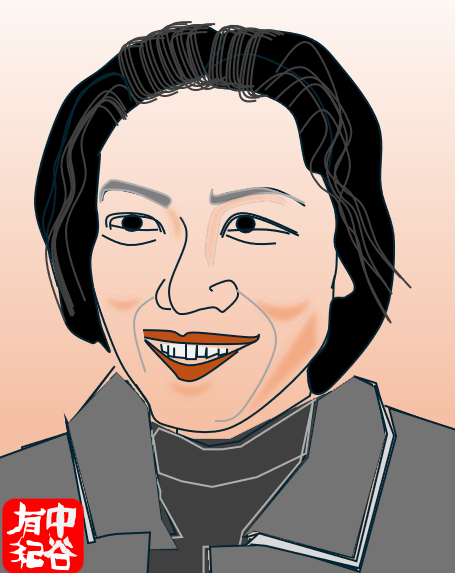
“Like Asura”-Kuniko Mukoda (ドラマ「阿修羅のごとく」向田邦子)

Like Asura (Ashura no Gotoku) is widely considered a masterpiece of domestic drama. Written by acclaimed screenwriter Kuniko Mukoda (1929–1981), the story follows four sisters whose brutally honest interactions reveal the Asura-like ego and obsession lurking deep within the human heart. The story is originally set right here in Kunitachi City.

Originally broadcast as an NHK television drama in 1979, the classic has been adapted multiple times over the decades:

1979: Original NHK TV Drama

2003: Feature Film (directed by Yoshimitsu Morita)

2004: Stage Play

2025: Netflix Series (directed by Hirokazu Kore-eda)

Netflix Homepagehttps://about.netflix.com/ja/news/asura-streams-january-9
Where is Yaho?

Where is Yaho?

Town

Town

Culture

Culture

Nature

Nature

Yabo Tenmangu

Yabo Tenmangu

History

History

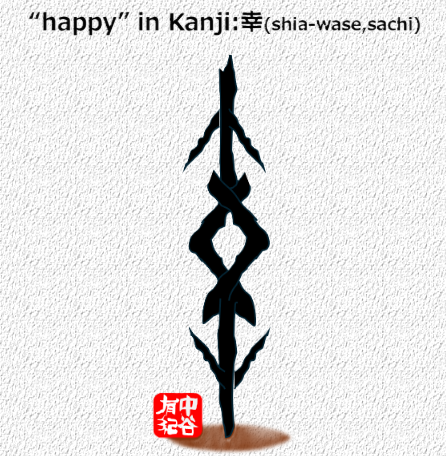
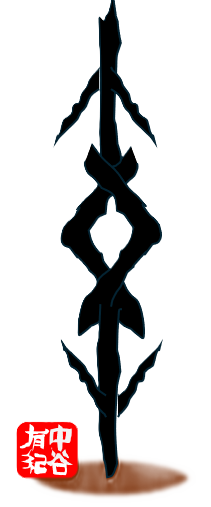
happy(幸)

This kanji depicts manacles, an ancient torture device. Many people wonder why a symbol for manacles came to mean ‘happy’? The center of the kanji shows the empty hole where a hand should be, symbolizing the good fortune of narrowly escaping torture.

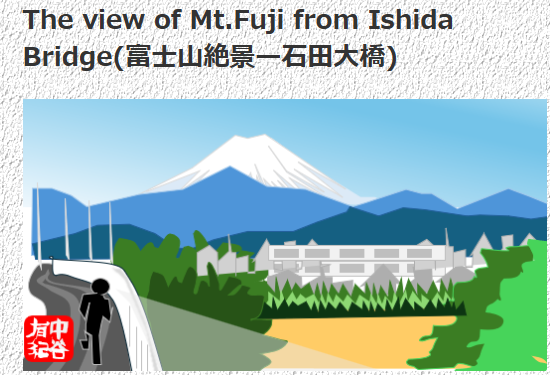
The view of Mt.Fuji from Ishida Bridge(富士山絶景ー石田大橋)

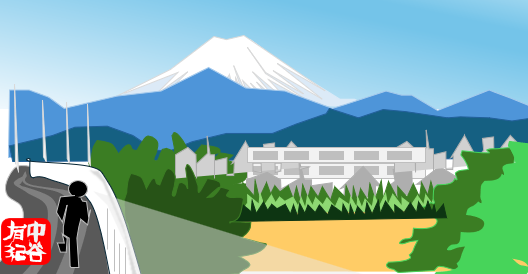
Ishida Bridge crosses the Tama River between Kunitachi and Hino. On a sunny day, you’ll see lots of runners out enjoying the great view of Mt. Fuji!

Where is Yaho?

Where is Yaho?

Town

Town

Culture

Culture

Nature

Nature

Yabo Tenmangu

Yabo Tenmangu

History

History

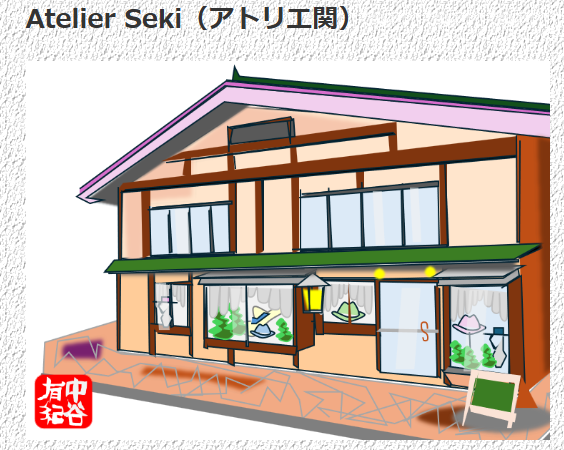
Atelier Seki(アトリエ関)

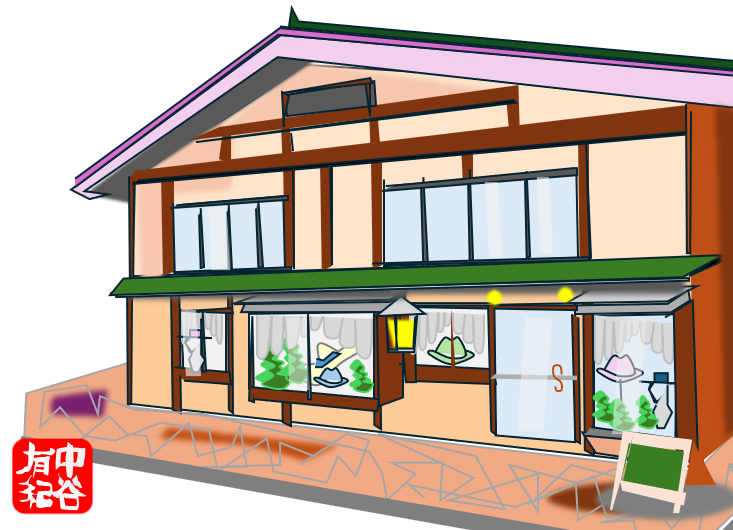
Tami Seki (1919–2010) was a hat designer who supported her husband, Gantei Seki, throughout her life. She opened her own hat atelier here in Kunitachi in 1967, which continues to be run by her students today. This atelier is also famous for inspiring the hat shop featured in Studio Ghibli’s movie Howl’s Moving Castle!

名称Atelier Seki/アトリエ関
所在地東京都国立市中2−2−1
Homepagehttps://atelierseki.jimdofree.com/
Where is Yaho?

Where is Yaho?

Town

Town

Culture

Culture

Nature

Nature

Yabo Tenmangu

Yabo Tenmangu

History

History


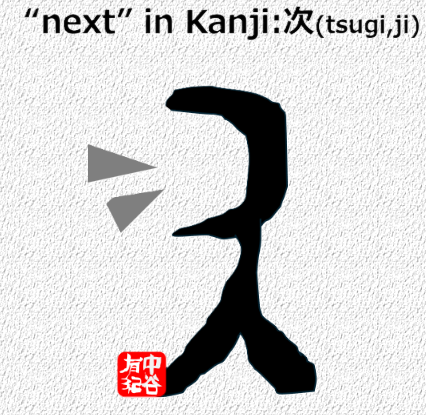
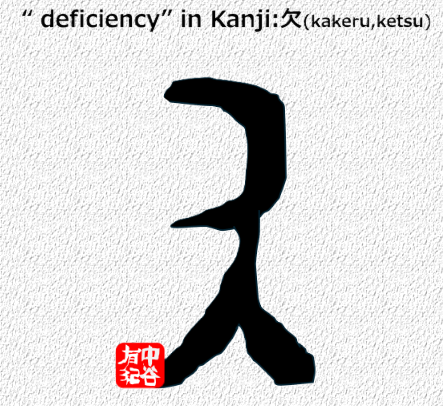
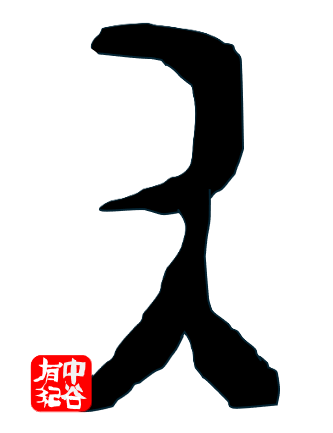
deficiency(欠)

This kanji depicts a person opening their mouth wide, as if yawning. Therefore, it came to mean a lack or deficiency of something.

人が大きく口を開けて「あくび」をしている無防備な姿を描いた漢字です。息が抜けて足りない様子から、物が足りないことや隙間を意味する「欠ける(かける・欠乏)」という意味になりました。

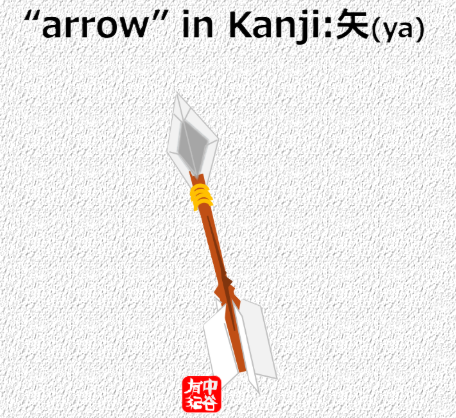
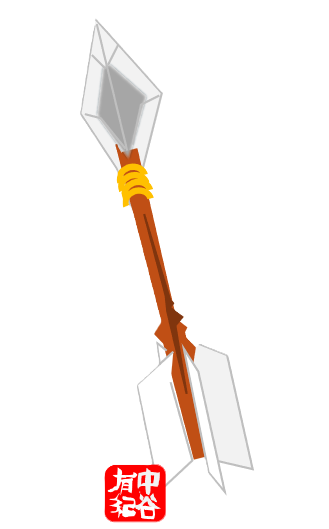
arrow(矢)

As you can see, this kanji depicts an arrow. Therefore, this kanji means ‘arrow.’ By extension, it came to be used to describe things that move fast, such as a swift river or heavy rain.

弓から放たれる「矢」の形をそのまま描いた漢字です。そこから「矢」そのものを意味するだけでなく、激しい雨や急流のように「非常に速く進むもの」を例える際にも使われるようになりました。

Words &Phrases

  • 矢面(yaomote):1)The direct line of incoming arrows. 2)The hot seat; a position where one bears the brunt of intense questioning or criticism.

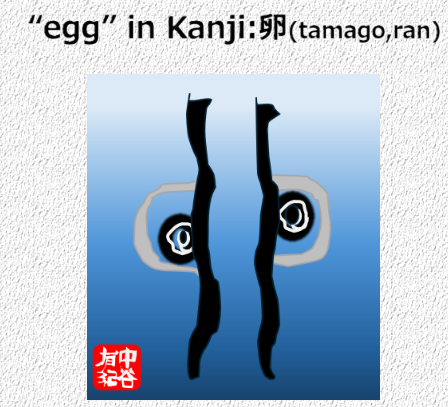
egg(卵)

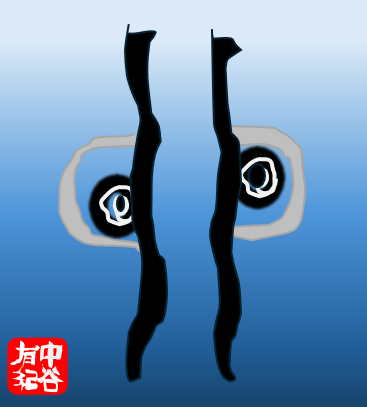
This kanji depicts fish eggs floating in water. Therefore, this kanji came to mean ‘eggs’ in general—including not only fish eggs, but also chicken eggs.

水の中に浮かんでいる魚の卵の姿をかたどった漢字です。そこから、魚の卵だけでなく鳥の卵も含め、命のもととなる「たまご(卵)」全般を表すようになりました。

Related Posts