
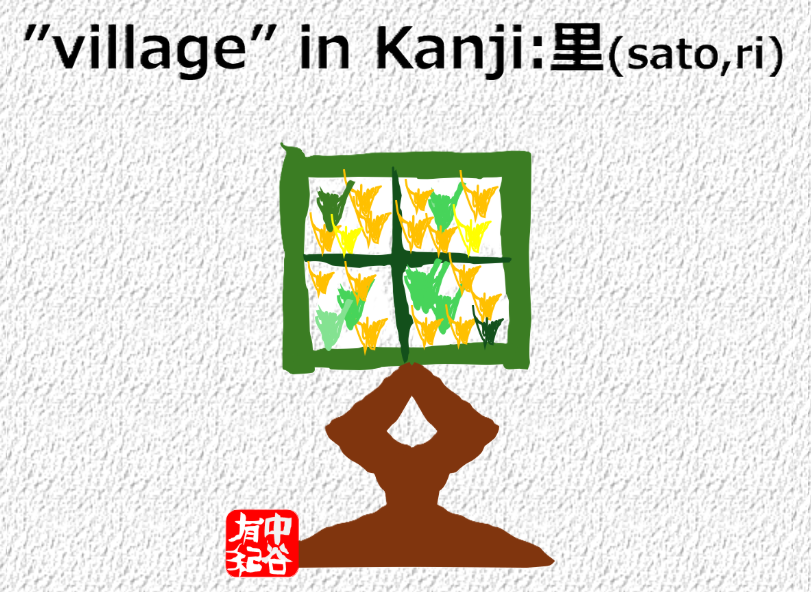

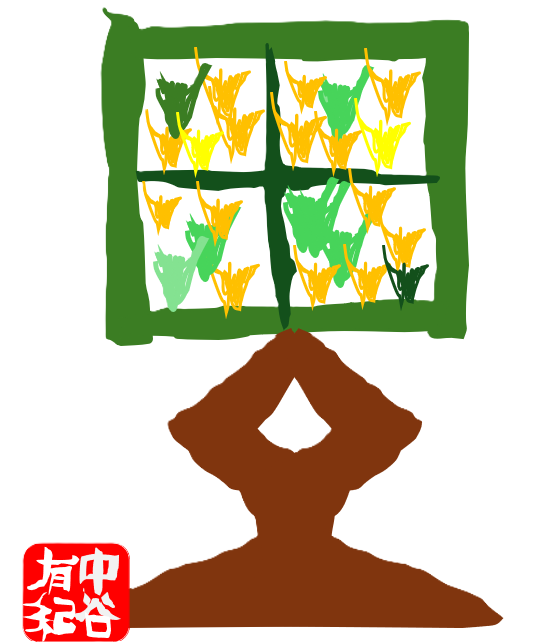
This kanji consists of two parts: the ‘rice field’ radical at the top and ‘earth’ or ‘soil’ at the bottom. Together, it originally depicted a plot of arable land where people gathered to farm and settle. Because of this, the character came to mean a ‘village,’ ‘hamlet,’ or ‘hometown,’ and was later also used as a traditional unit of distance.
Words & Phrases
- 里心(satogokoro):A sentimental yearning for one’s birthplace or the place one used to call home.
- 里山(satoyama):Woodlands and gentle hills adjacent to villages that are deeply connected to everyday living.