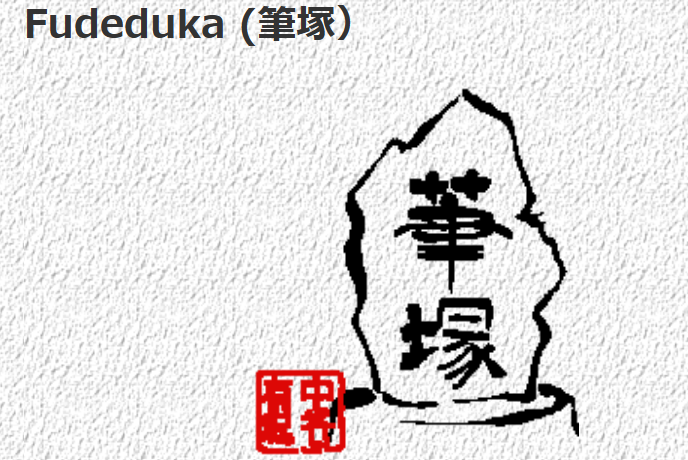
Near the main hall of Yabo Tenmangu sits ‘Fude-zuka,’ a monument dedicated to the God of education, a master of Japanese calligraphy. It is believed that tracing the letters on this stone helps improve your writing skills, and historically, schoolchildren buried their old brushes here.
Behind the hall, you will find a serene pond fed by the never-drying ‘Tokiwa no Shimizu’ spring. The pond features a tiny island with Itsukushima Shrine, where a sacred statue of Benzaiten is said to hold the handprint of the famous monk Kukai on its back.

SideStory:The Brush Mound and the Secret Spring: Where Art Meets Legend(文字が上手くなる筆塚?)
ー社殿に向かって左側の堀際に「筆塚」(ふでづか)と刻まれた塚があります。これは菅原道真が日本三大名筆の一人と言われ、書道の大家であったことに由来しています。この碑面を筆でなぞると、文字が上達するといわれています。また昔この辺の寺子屋で学んでいた子供たちは、使い古した筆をこの筆塚の下に埋めたと言われています。 社殿の後ろには、涸れたことがないという「常磐の清水」という湧き水を美しく湛えた池があります。その小島には巌島神社と呼ばれる弁財天が祭られており、祭像の背中には作者の空海の手形が押してあると言われています。
ーTo the left of Yaho Tenmangu’s main hall, resting quietly near the moat, stands a mysterious stone monument inscribed as “Fude-zuka” (The Brush Mound). This monument pays tribute to Sugawara no Michizane, who was not only a brilliant scholar but also celebrated as one of Japan’s three greatest master calligraphers.
Legend has it that if you trace the carved characters on this stone with a calligraphy brush, your own handwriting and artistic skills will beautifully improve. Deepening this connection to education, it is said that in the old days, local children studying at nearby Terakoya (traditional temple schools) would gratefully bury their well-worn, retired brushes beneath this mound to honor their tools and pray for academic success.
The wonders of the shrine continue right behind the main hall, where you will find a serene, hidden pond filled with “Tokiwa no Shimizu” (The Everlasting Spring Water). This natural spring is legendary for having never once run dry throughout history.
On a small, picturesque island in the center of the pond sits Itsukushima Shrine, dedicated to Benzaiten, the Goddess of music and arts. Intriguingly, local lore whispers that the back of this sacred divine statue bears the actual, authentic handprint of its creator—the legendary 8th-century Buddhist monk, Kukai (Kobo Daishi).