The movie ‘Izakaya Choji’ was based on a novel by Hitomi Yamaguchi, a writer who dearly loved Yaho. The story portrays the intersecting lives of the various people who gather at a tiny bar called ‘Choji’ near Yaho Station. Starring the legendary actor Ken Takakura, the film brought a sense of drama and romance to the town of Yaho.
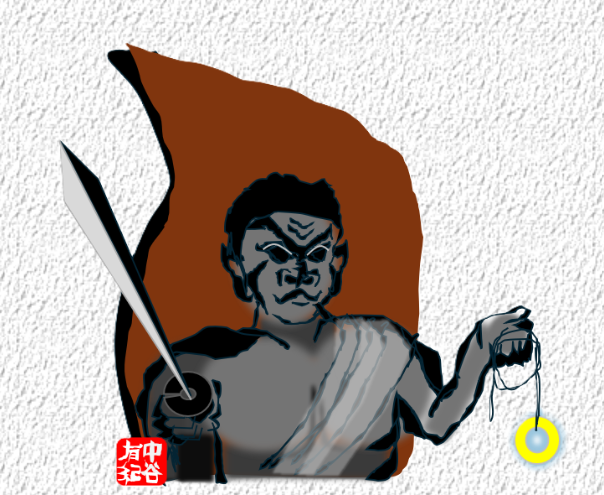
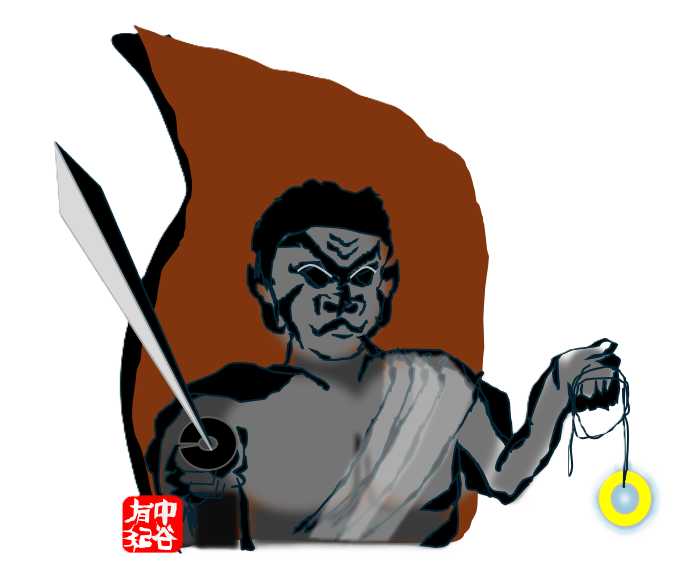
Seki Gantei (1919–2020) was born in Yaho village and dedicated his entire life to working as a sculptor and painter. He often inscribed his personal philosophy onto his artwork: ‘Live life effortlessly. Do not worry. Be like the wind; be like the water.You can see some of his art pieces like this Budda statue(Fudo-Myouou)at the Sato Meiso-joukikan in Kunitachi now.
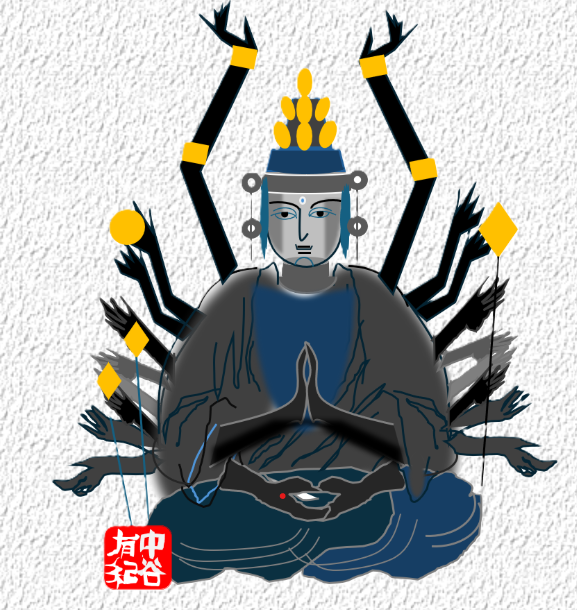
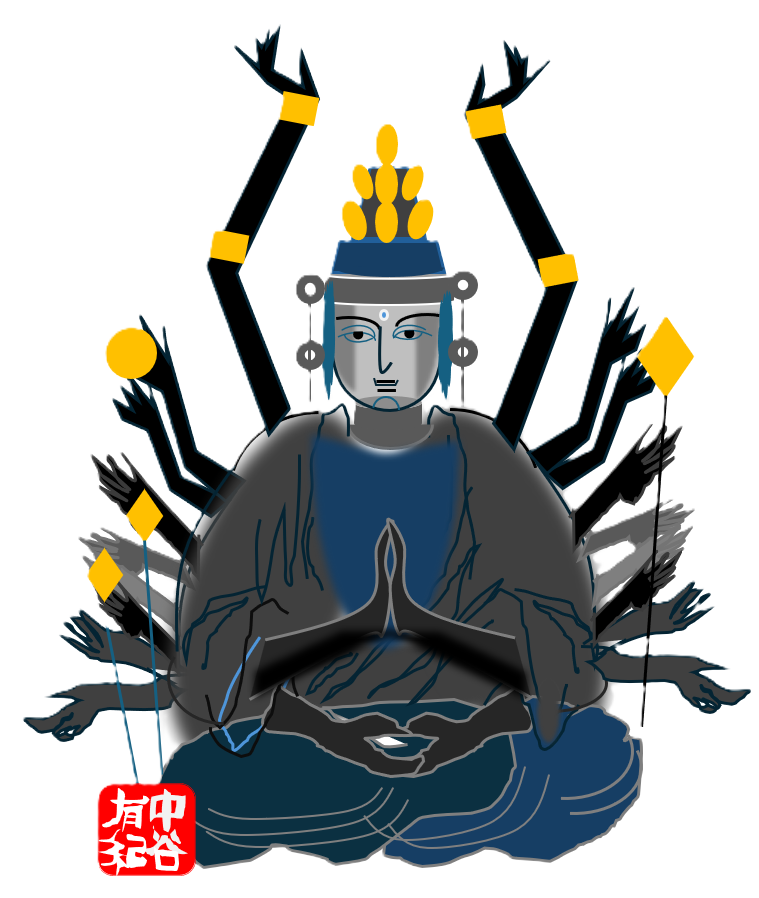
“This Buddha statue shows the style of the famous Kei school of sculptors. It is the main image of worship at Nanyou-ji Temple’s Daihi-den Hall. It was made between the Kamakura period and the early Muromachi period. This merciful Buddha uses its eleven faces and one thousand hands to save all people.
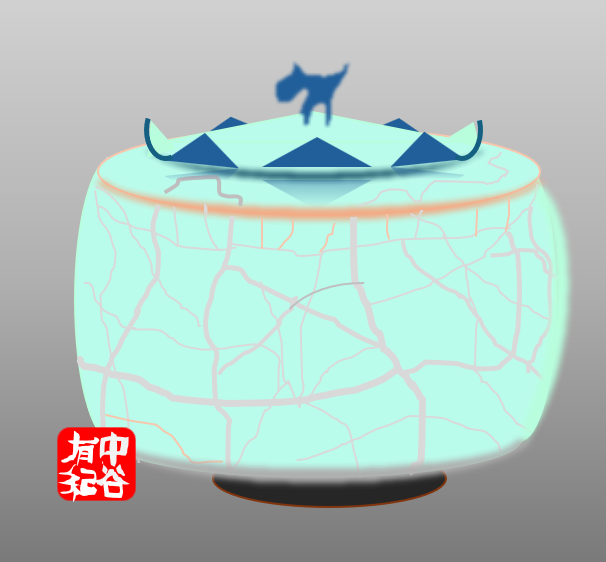
Koheiji Miura (1933–2006) lived in Kunitachi. In 1997, he became Japan’s first master of Seiji (celadon) pottery to be named a Living National Treasure.
Seiji is known for its mysterious blue color and unpredictable crack lines. It is so beautiful and hard to make that people say celadon lovers would lose all their money and sacrifice their lives just to have it.
When he was young, Miura saw an exhibition of Chinese celadon and often said, ‘If I can make Seiji like this, I will become a National Treasure.’ At the end of his long journey, he made it happen!
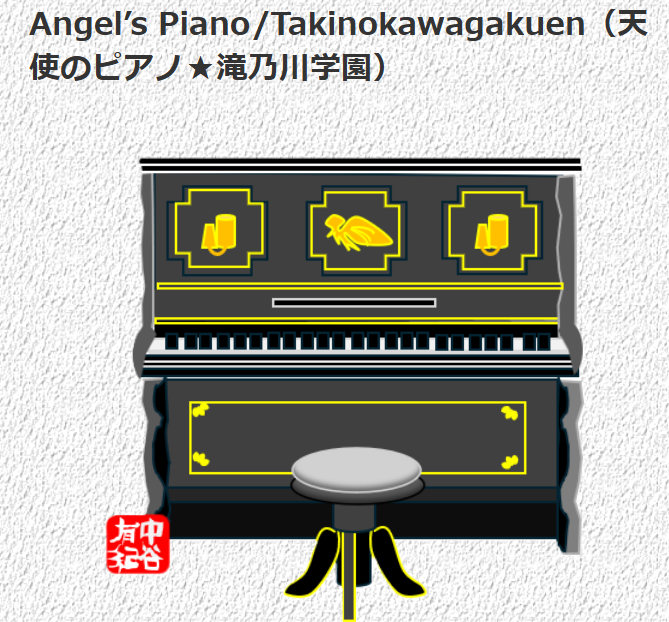
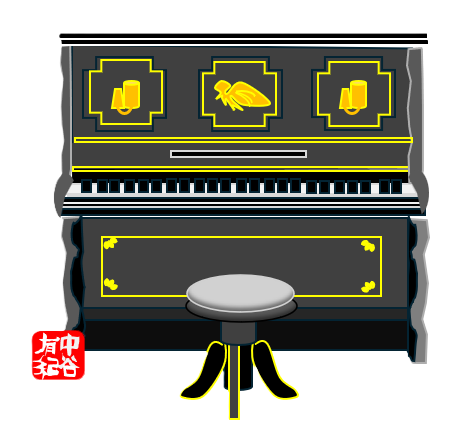
This is Japan’s oldest upright piano, imported in 1885. Fudeko Ishii, who started this facility for people with intellectual disabilities, used to play this piano at Christmas parties long ago. We call it the ‘Angel’s Piano’ because there is an angel emblem in the middle.
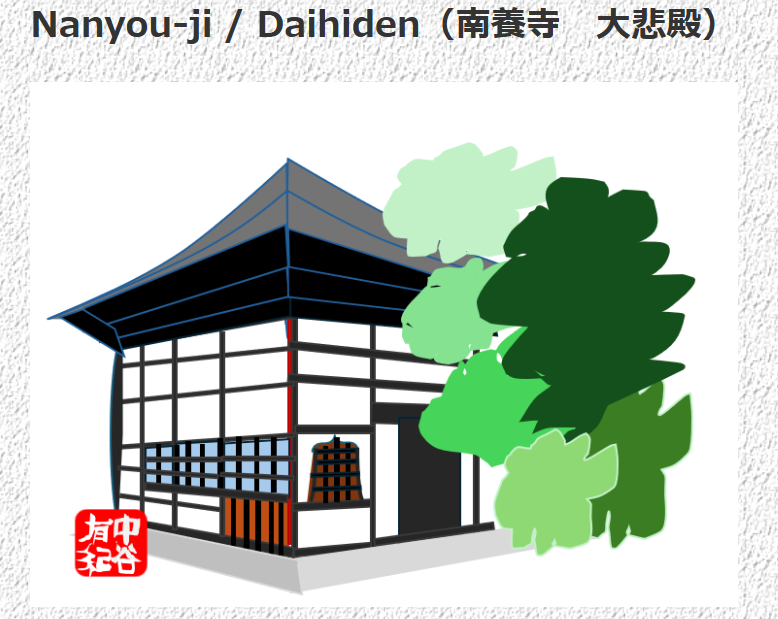
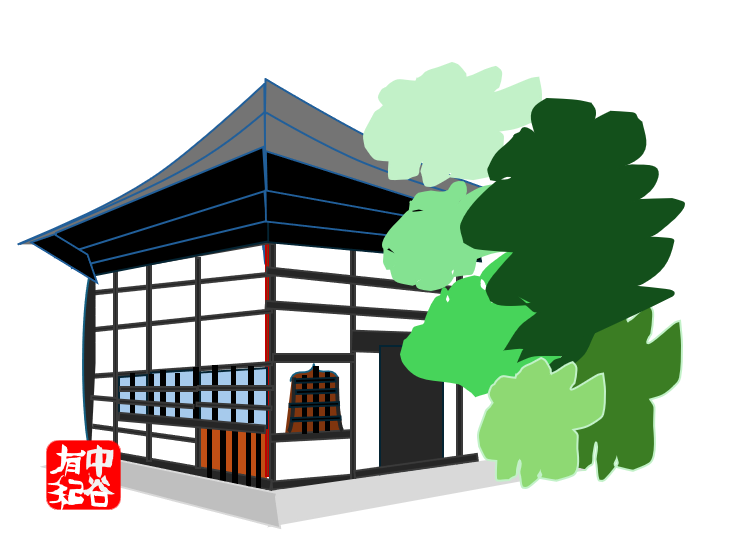
In 1793, this Kannon-do (a hall housing a Buddha statue) was relocated here to Nanyou-ji from Chiushi (eastern Yaho).The main pillar is slightly swollen into an oval shape. It is said that this was either an intentional design for earthquake resistance, or simply poor craftsmanship by the carpenter.
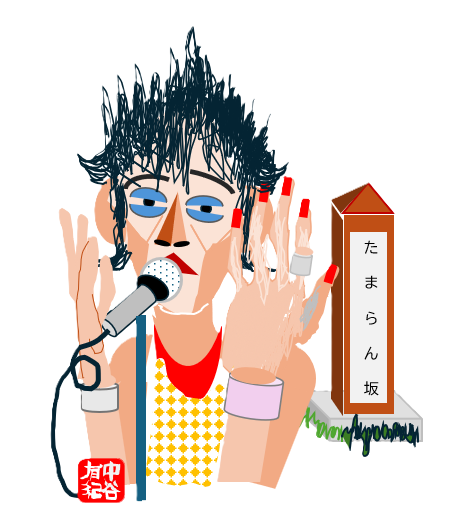
This gentle 200-meter slope marks the border between Kunitachi and Kokubunji. It is famous as the home of the late Kiyoshiro Imawano, Japan’s ‘King of Rock,’ who once boarded nearby. His rock band, RC Succession, captured his life here in the famous ballad ‘Tamaran-zaka,’ making this hill a legendary destination for rock fans.
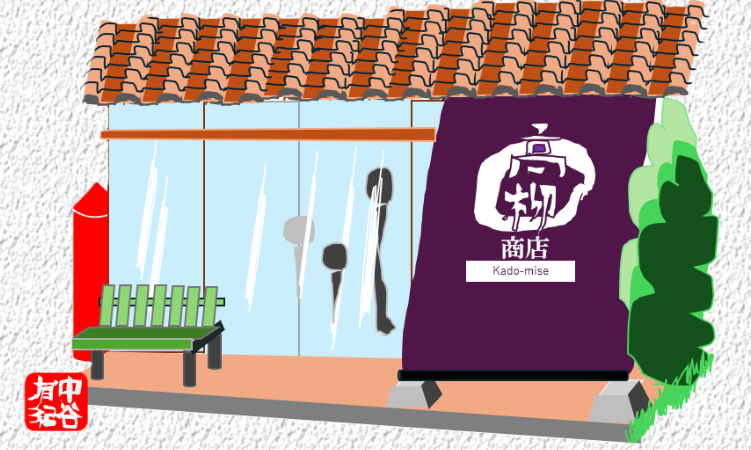
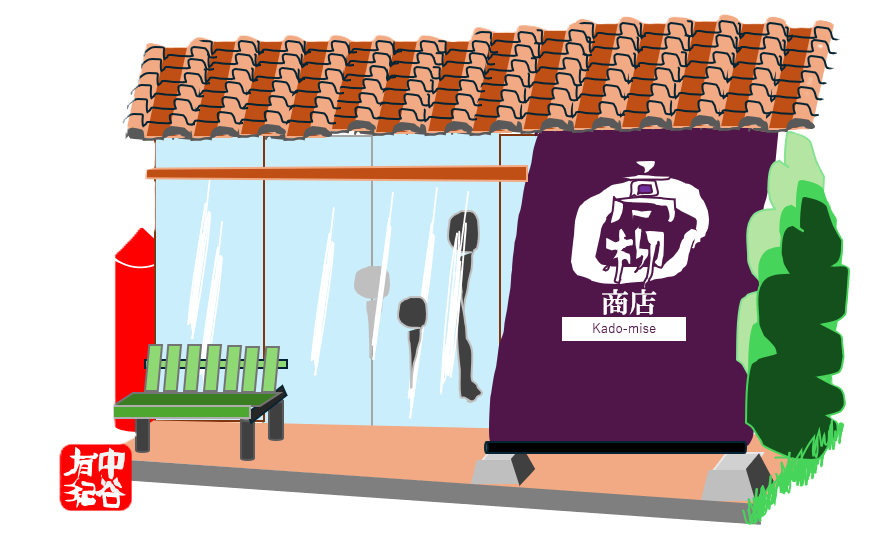
Every Japanese school neighborhood seems to have that one legendary general store, and for Yaho, it is Takayanagi Shouten. Founded all the way back in 1934, this neighborhood institution has spent generations supporting the daily lives of local residents. They sell everything from cheap nostalgic sweets (Dagashi) and school stationery for children, to a carefully curated selection of fine Japanese Sake for adults.
Located right on the northeastern corner of Kunitachi Dai-ichi (First) Elementary School, this historic shop is affectionately known by everyone in the neighborhood as “Kado-mise”—which literally means “The Corner Store.” It remains a warm, living piece of Yaho’s community history.
About 1,400 years ago, around the 7th century, the Yaho area was ruled by powerful local leaders. The incredible evidence of their reign came to light when a cluster of ten Kofun (ancient burial mounds) was discovered right here in Yaho.
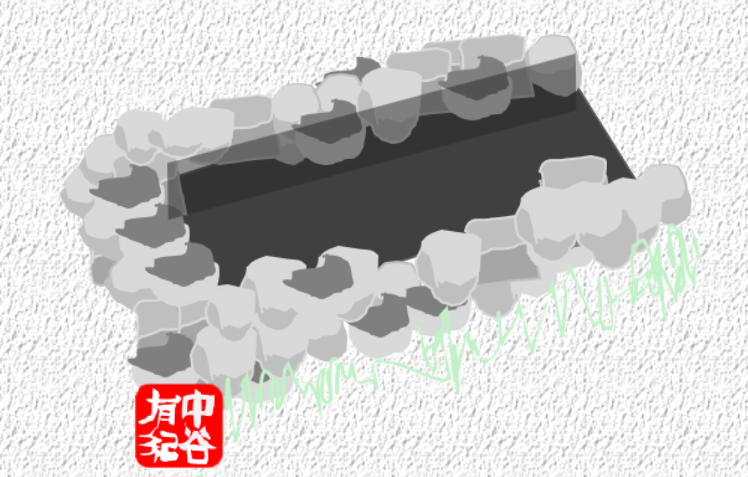
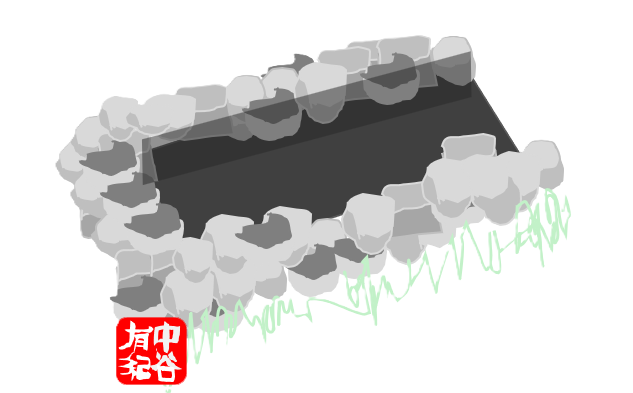
Today, one of these remarkable tombs has been meticulously reconstructed here in the Shiken-zaike district.
The tomb features a unique engineering style of the era: ancient builders gathered smooth river stones from the nearby Tama River and piled them up high to create a protective, enclosed burial chamber (Genshitsu). Originally, this sacred chamber was covered by a massive earthen mound that served as a grand, roof-like hill over the final resting place of the leader.
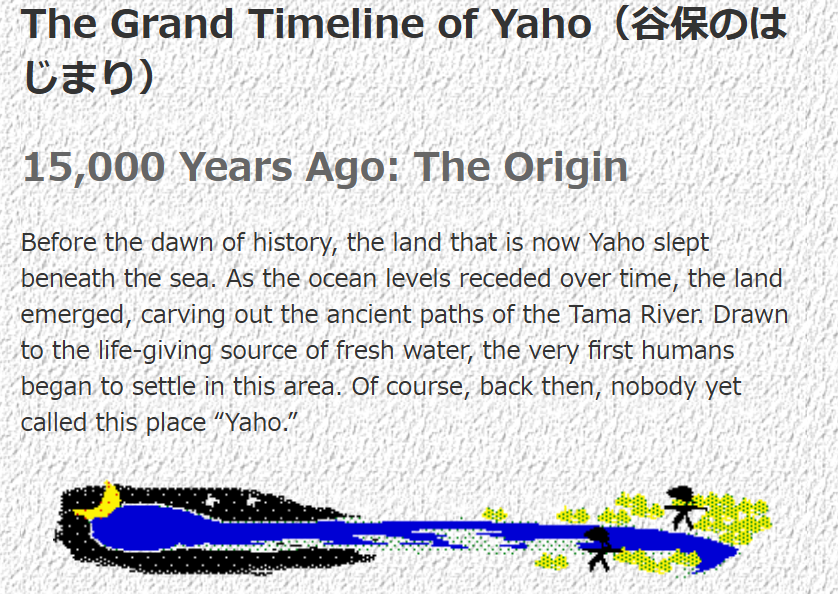
Before the dawn of history, the land that is now Yaho slept beneath the sea. As the ocean levels receded over time, the land emerged, carving out the ancient paths of the Tama River. Drawn to the life-giving source of fresh water, the very first humans began to settle in this area. Of course, back then, nobody yet called this place “Yaho.”
1,200 BC: The Birth of Community (The Jomon Period)
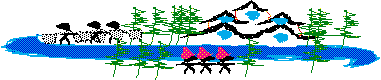
Human ingenuity flourished as ancient people began crafting primitive stone tools, including finely knifed stones. This era marked a revolutionary change in lifestyle: the birth of early villages where people chose to live and work together. Today, archaeologists still uncover these stone tools and the remains of pit-dwellings deep within the earth of Yaho, standing as silent witnesses to this ancient community.
100 AD: The Agriculture Revolution & the Rise of Leaders (The Yayoi Period)
The introduction of rice cultivation fundamentally transformed society. As people mastered rice farming, the concept of “wealth” was born, tied directly to the size of one’s harvest. This economic shift created social classes, leading to the rise of influential local leaders who governed and protected the growing community.
700 AD: An Era of Politics and Culture (The Nara,Heian&Kamakura Periods)
History records that it was during the Kamakura era that people first began using the name “YA-HO.” Legends suggest that a magnificent local palace once stood around what is now Joyama Park. The sacred Yabo Tenmangu Shrine, which still watches over the town today, was established during this deeply spiritual medieval era.
1,700 AD: Shifting Northward (The Edo Period)
The town landscape shifted dramatically with the construction of the Koshu-kaido, a major highway built just north of Yaho. Bustling houses and vibrant shops quickly opened along the busy roadside. With this development, Yaho Village expanded its borders from the banks of the Tama River far up into the north.
1,890 AD: Shaping Modern Kunitachi (The Meiji Period)
Politically, a new era began. Three neighboring settlements—Yaho, Aoyagi, and Ishida—merged into one unified political entity known as “Yaho Village.” Shortly thereafter, a major administrative shift took place, and the entire Yaho region was officially transferred from Kanagawa Prefecture to become a proud part of Tokyo.
1927 AD: The Birth of “Kunitachi” (The Taisho into Showa Era)
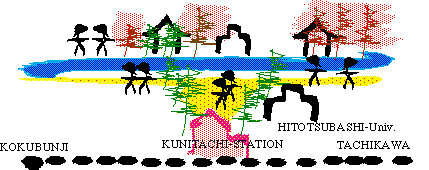
A groundbreaking project transformed the northern part of Yaho Village, led by the Hakone-Tochi Development Company. Inspired by modern European city planning, particularly in Germany, they envisioned a premium educational town from scratch. To achieve this, they successfully negotiated with Tokyo Shoka University (now the prestigious Hitotsubashi University) to relocate its campus here, establishing the intellectual heart and symbol of the community.
The naming of this new railway station holds a fascinating double meaning:
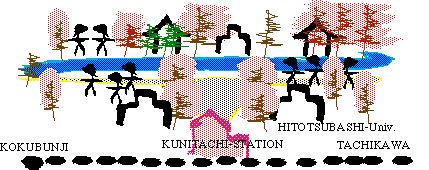
The Geography: The new station sat directly between KOKUbunji station to the east and TachiKAWA station to the west. Taking the initial characters from each neighboring station (KOKU + TACHI), the name “KUNITACHI” was born.
The Vision: Beyond geography, the name carries a poetic ring in Japanese—Kuni means “country or region” and Tachi means “to stand up or begin.” Thus, the name proudly declared: “A brand-new, ideal region begins from here.”
1951 AD: From Village to Town (The Showa Era)
As the population grew, the municipality officially transitioned from a “Village” to a “Town.” This milestone sparked a passionate local debate over what the new town should be called: the historical “Yaho” or the modern “Kunitachi“? Ultimately, “Kunitachi” won the hearts of the people due to its widespread recognition as the beloved station name.
The very next year, in 1952, the residents achieved a monumental victory: the Tokyo Metropolitan Government officially designated the area as a “Bunkyo Chiku” (Special Educational District). This strict legal protection banned the development of nightlife entertainment and businesses unrelated to education, successfully preserving a pure, safe, and beautiful environment for students and children.
1967 AD: The Modern Kunitachi City
Reaching its modern milestone, Kunitachi officially upgraded its status from a “Town” to a “City,” cementing the elegant, inclusive, and culturally rich community we see today.
This is the grand, interconnected history of Yaho and Kunitachi City—a story sculpted by fresh water, preserved by its people, and inspired by a vision of a better future.