

At the top of this figure, you can see a slope that represents a CLIFF. Right underneath this cliff, there is a round circle. Yes, this kanji means ‘STONE’—perfectly capturing how rocks are naturally found scattered at the base of a cliff!


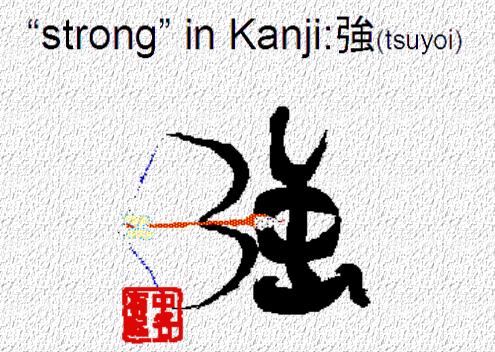
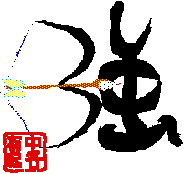
“This figure depicts a person’s arm pulling back a BOW and ARROW. Just like an archer taking aim, this kanji perfectly captures the powerful action of ‘SHOOTING’ or ‘RELEASING’ an arrow!


This kanji is deeply rooted in the daily lives of ancient people. It is a literal drawing of a SHEEP’s face, captured from a direct, front-row view. If you look closely, you can see its curved horns, ears, and long nose!


“This kanji is also one of the most primitive characters, as it directly depicts what ancient people saw with their own eyes. It beautifully visualizes a flash of brightness, meaning ‘SPARK’ or ‘LIGHT’ in Japanese!


This character combines a beautifully ripe crop on top with the winding symbol of ‘Ability’ below. It visualizes the ultimate form of ‘SMART’—representing someone who is truly ‘EXCELLENT’ and ‘SUPERIOR.


This kanji consists of two main parts. At the bottom, you can see the ‘SUN’ as a warm circle. The upper part represents a ‘PLANT’ that is now growing and pushing up from under the land. Therefore, this kanji means ‘SPRING’—the beautiful season when plants grow under the warm sun.


This kanji originally depicted a grand shelf or hanger used to hook DRUMS and BELLS for sacred festivals. Over time, its meaning shifted to represent ‘A PLACE WHERE IMPORTANT THINGS ARE SET.’ Today, this character has evolved to mean ‘STUDY’ or ‘ACADEMIC WORK’ in Japanese.


Ancient people dug up the ground like this to make houses and tombs. Since this work was exhausting, they often couldn’t dig enough. Therefore, this kanji represents being “not quite enough” or “slightly incomplete”,”sub-“.