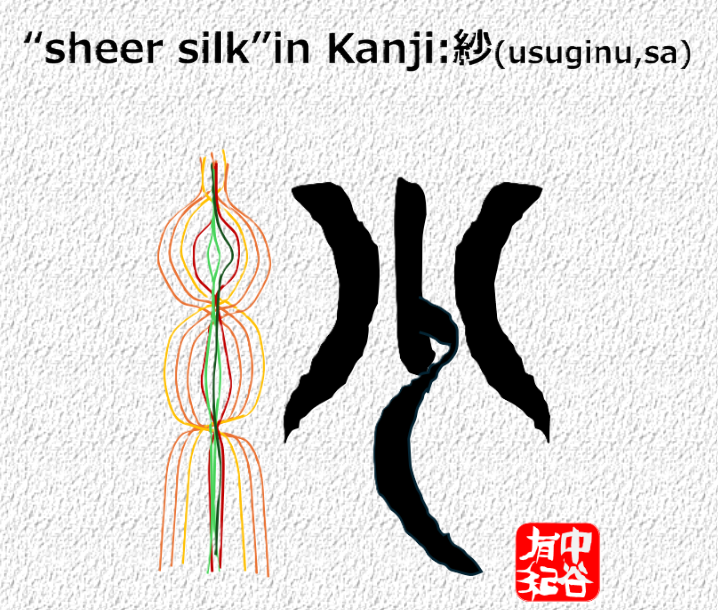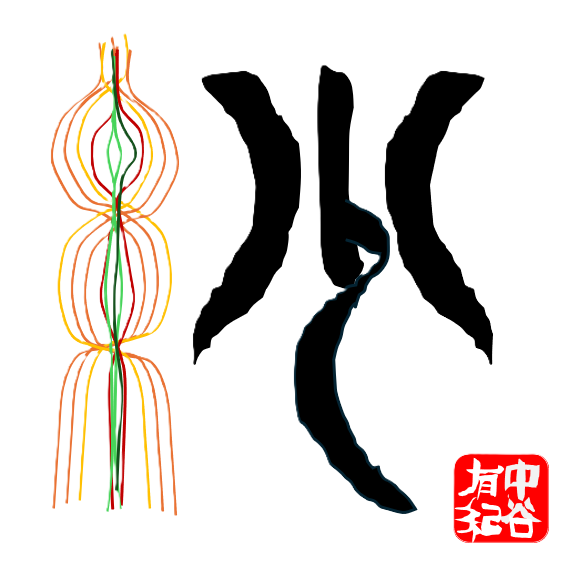
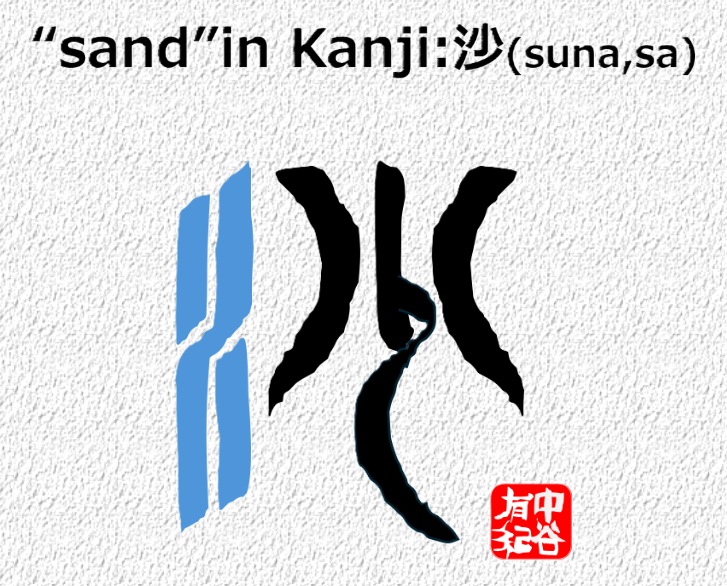

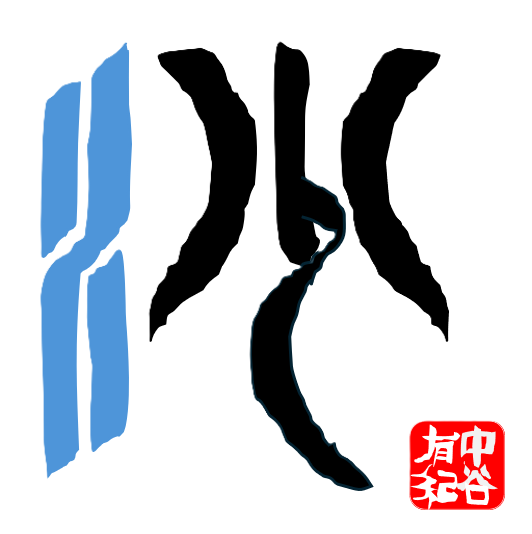
This kanji consists of two parts: the ‘water’ radical on the left, depicting droplets or flowing water, and the element for ‘small’ or ‘few’ on the right, which represents tiny separated specks. Combined, the character illustrates fine grains of sand scattered along a shore or riverbank, giving it the meaning of ‘sand’ or ‘sandbar.’
この漢字は、2つの部分からできています。左側は水滴や流れる水を表す「水(さんずい)」、右側は小さく分かれた粒を表す「少(すこし・小さい)」です。これらが組み合わさり、波打ち際や川岸に細かな粒がサラサラと散らばっている様子を表したことから、「すな(砂・沙)」や「すのせ(砂州・中州)」という意味になりました。
Words & Phrases
- 沙汰(sata):notice
- 沙漠(sabaku):desert