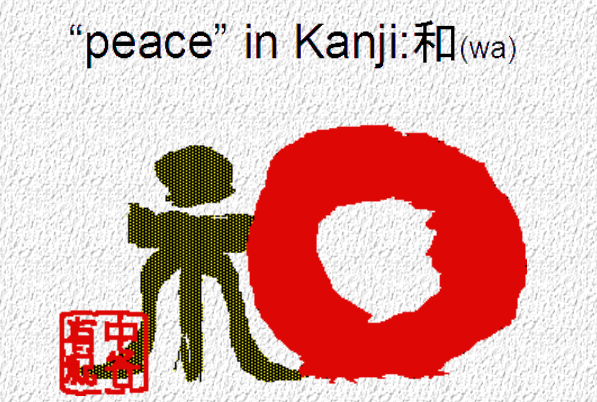
peace(和)

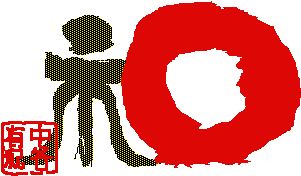
On the left side of this figure, you can find a sacred stand for food and offerings, while on the right, a large circle symbolizes the collective mouth of the people. This character captures the profound moment where citizens discuss and debate their political problems to find a solution in front of the stand representing their gods or king. Therefore, this beautifully comes to mean ‘peace’!
horse(馬)

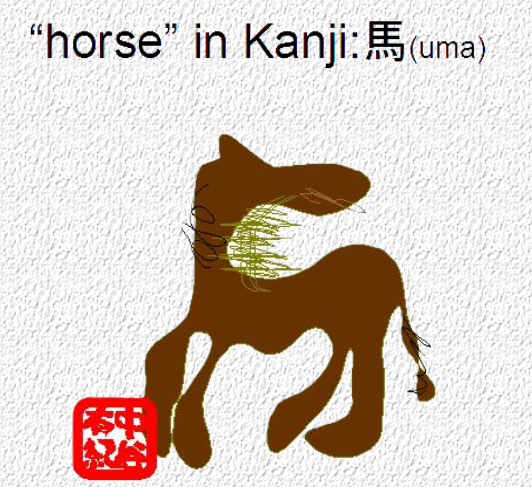
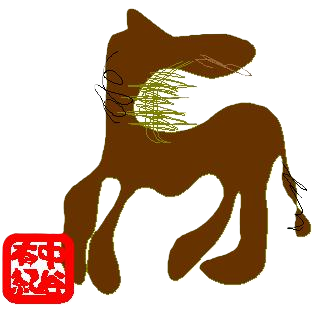
This character symbolizes the shape of an animal that was deeply intertwined with the lives of primitive people. In its lines, you can spot a silhouette just like the iconic Ferrari logo—yes, this character means ‘horse.’ This majestic horse is heading right, firmly standing on its legs, with its tail swept down!

大昔の人々の暮らしと深く結びついていた動物の姿をそのまま描いた漢字です。ピンと立ったたてがみ、四本の足、そして垂れ下がった尾を持って力強く立つ「うま(馬)」のシルエットをかたどっています。

float(浮)

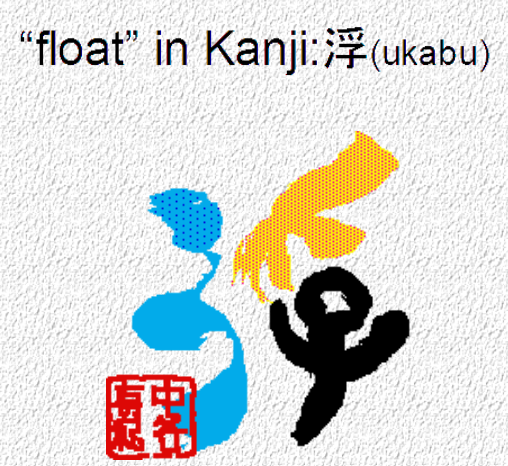
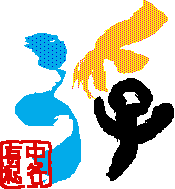
On the right side of this character, you can see a hand gently cradling a baby, while the left side shows splashes of water. This beautifully suggests that the fluid motion of holding a baby close resembles the graceful stroke of a swimming hand. Therefore, this character captures that very essence to mean ‘float’.

この漢字は、左側は水しぶき(水)を表し、右側は赤ちゃんを優しく抱きかかえる親の手を描いています。赤ちゃんをふわりと抱き寄せる柔らかで優しい手の動きが、水面を手でかき分けながら泳ぐしなやかな動きに似ていることから、水の上に浮かび上がる「うく(浮く・浮かぶ)」という意味になりました。

strong(強)

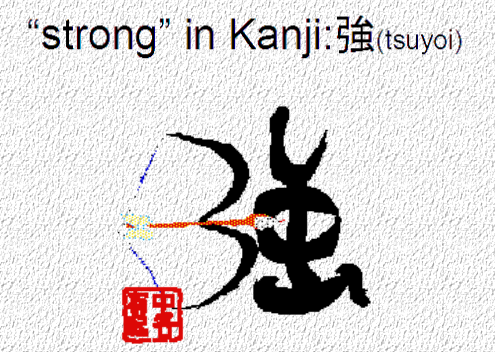
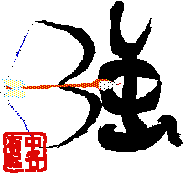
In the same way, you can find a bow on the left side of this figure, which symbolizes immense strength. On the right, there is an element resembling an insect. Since insects were also seen as symbols of incredible resilience in ancient times, this character perfectly combines these ideas to mean ‘strong, tough, and mighty’.