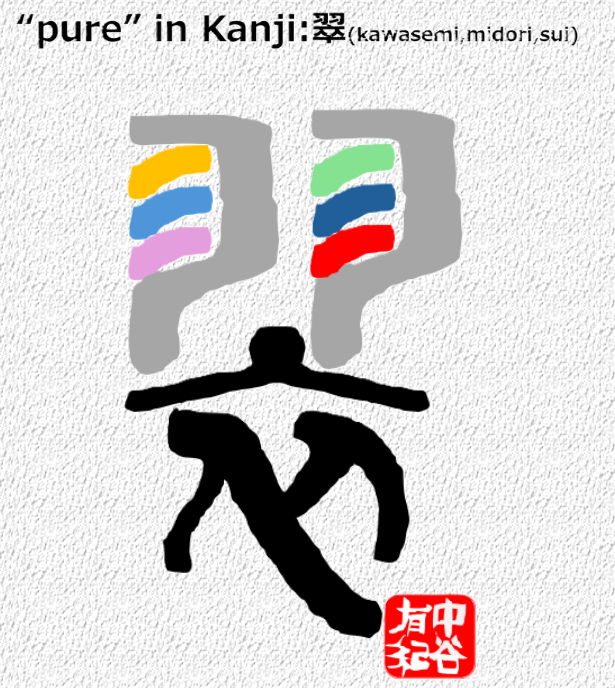

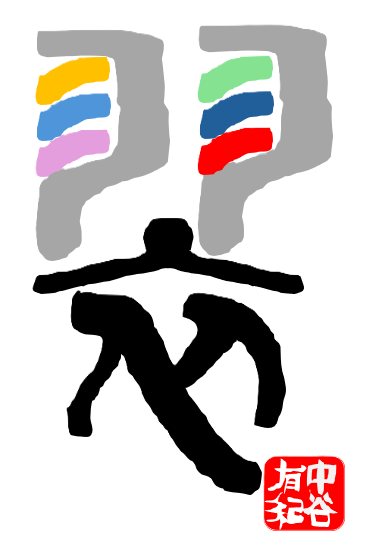
This kanji consists of two parts: the ‘feather’ radical at the top, depicting a bird’s wings, and the ‘clothing’ element below, which acts as a phonetic guide sharing the same pronunciation as the word for ‘pure’ (sui). Combined, the character originally referred to the ‘kingfisher’—a bird prized for its vibrant, pure-colored plumage—and by extension came to mean ‘emerald green’ or ‘pure.’
この漢字は2つの部分からできています。上部は鳥の翼を表す「羽(はね)」、下部は「純粋(すい)」と同じ発音を持つ音の目印(音符)として使われた「卒(衣)」です。これらが組み合わさり、もともとは澄んだ鮮やかな色の羽毛を持つ美しい鳥「カワセミ(翡翠)」を指していました。そこから転じて、カワセミの羽のような鮮やかな「みどり(緑色・翡翠色)」や「澄みきった・純粋な」という意味になりました。