
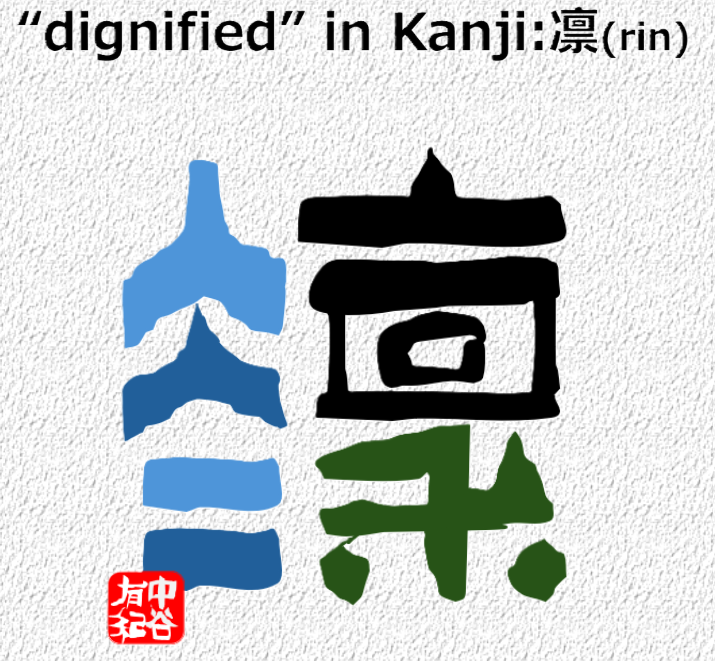

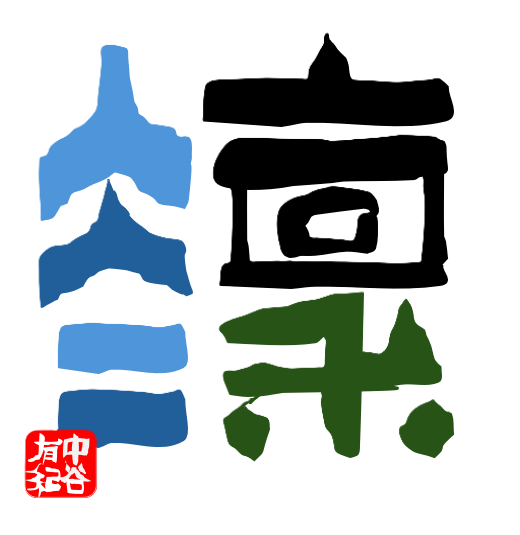
This kanji consists of three parts: the ‘ice’ radical on the left, representing coldness, paired on the right with a ‘storehouse’ above and a ‘grain’ or ‘rice plant’ below bending under the weight of its harvest. Combined, they portray a granary tightly sealed and guarded against the biting cold. By extension, this image of crisp, bracing chill evolved to mean ‘to brace oneself,’ ‘dignified,’ or ‘majestic.
この漢字は3つの部分からできています。左側は冷たさを表す「にすい(氷)」、右側は上部の「倉(くら)」と、実りの重みで垂れ下がる「稲(禾)」を組み合わせた「稟」です。これらが合わさり、凍てつくような厳しい寒さから大切な穀物の倉をしっかりと守り固める様子を表しています。そこから転じて、身が引き締まるような冷たさや、きりっとした気高さから「ひきしまる(凛とする)」「りりしい(凛々しい)」という意味になりました。