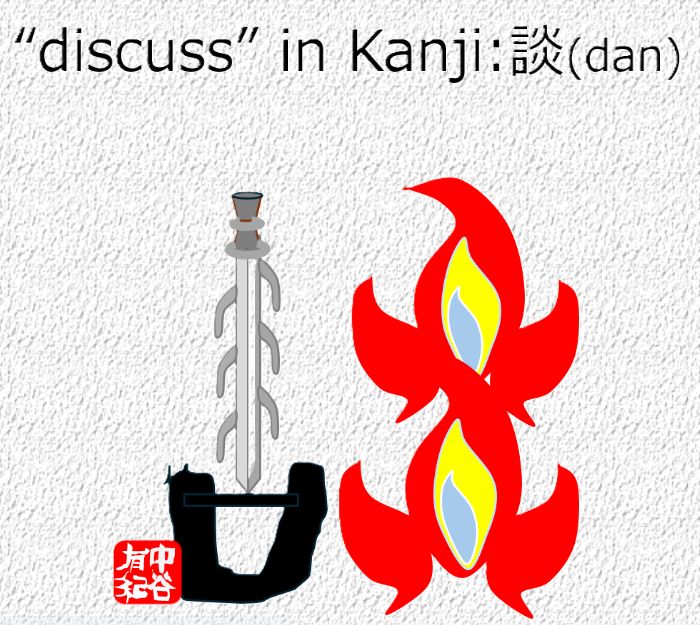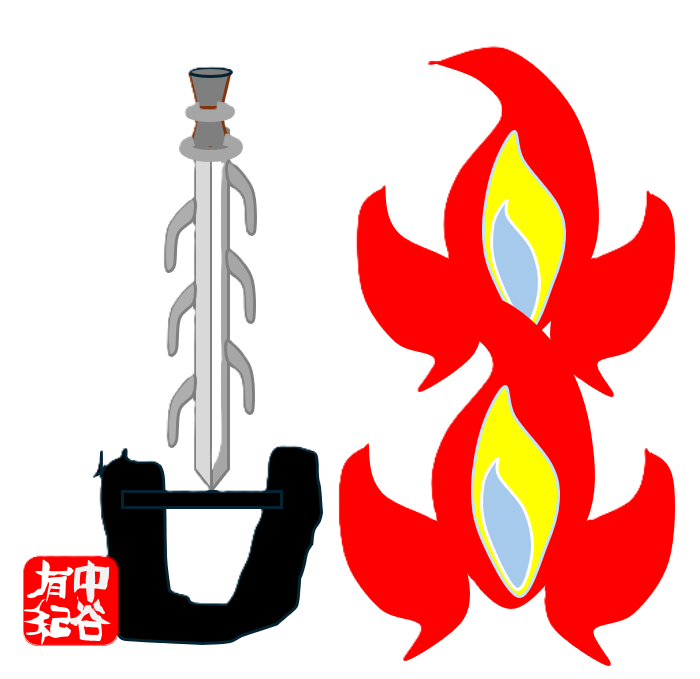

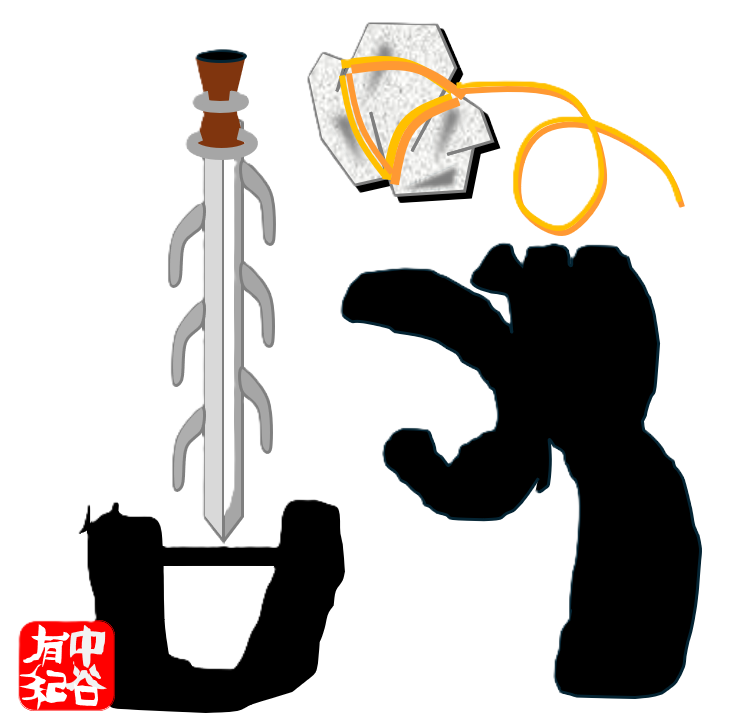

This kanji is composed of two parts: ‘speech’ on the left and ‘fire’ on the right. Therefore, it carries the meaning ‘to discuss’—representing people speaking with a passionate fire in their hearts.


This kanji is composed of two parts: ‘speech’ on the left and ‘fire’ on the right. Therefore, it carries the meaning ‘to discuss’—representing people speaking with a passionate fire in their hearts.


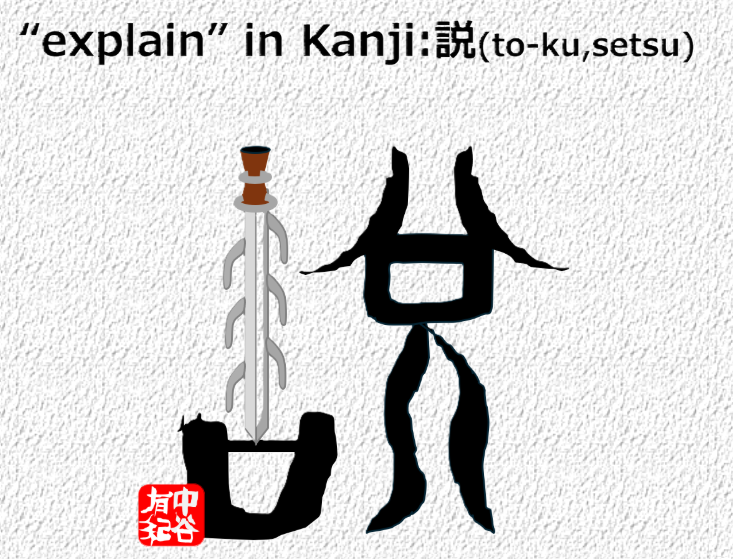
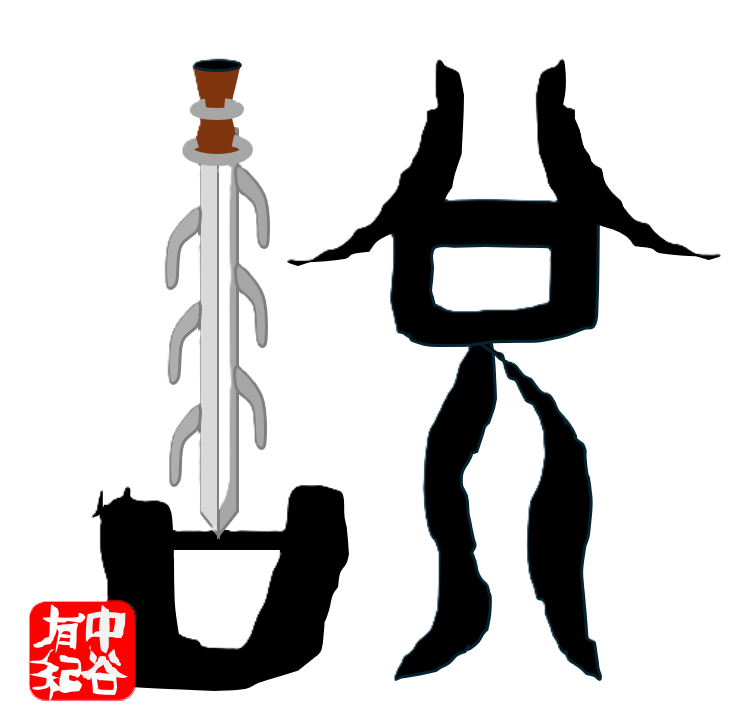
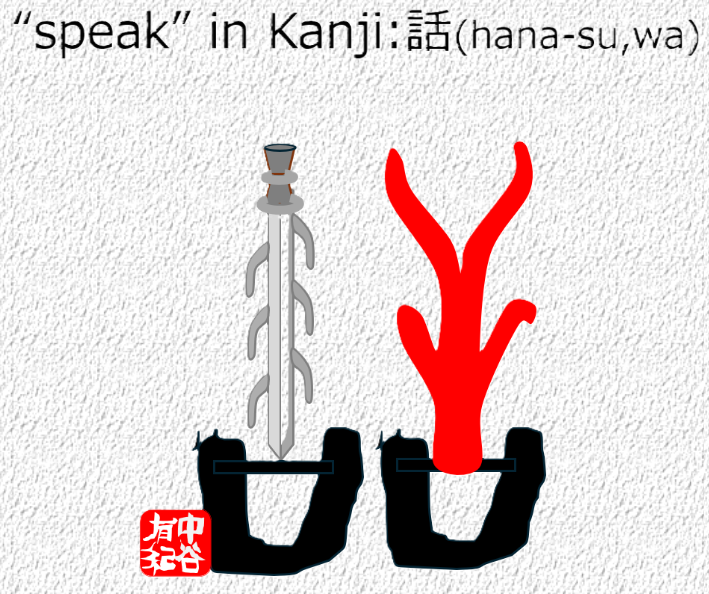
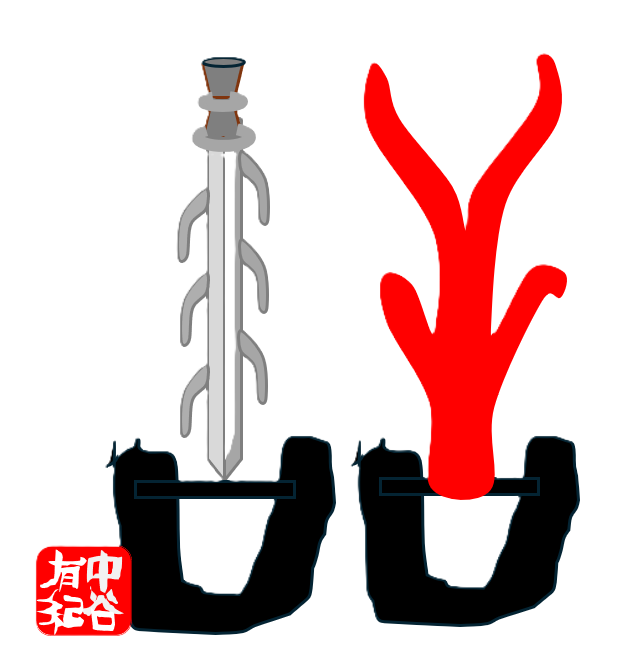
This kanji is composed of two parts: ‘words’ on the left, which signifies a sacred promise to God made with a sword and a mouth, and ‘tongue’ on the right, which shows a tongue coming out of a mouth. Therefore, the combination of these elements creates the meaning ‘to speak’.


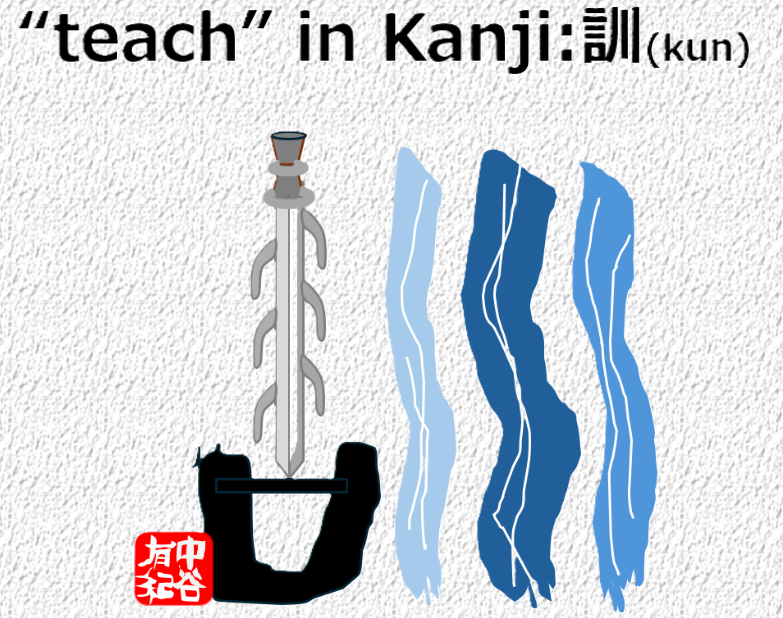
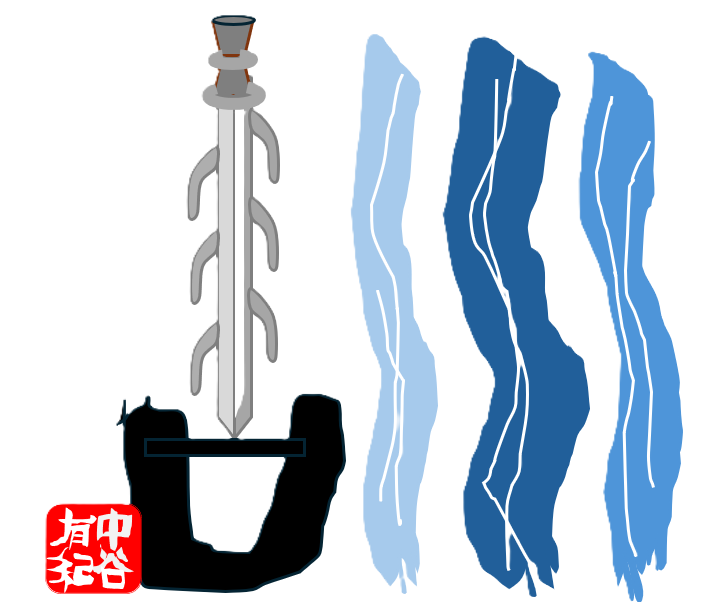
The kanji combines the radical for “speech” with the character for “river”. This implies explaining things kindly by flowing along with and gently embracing people’s natural emotions, just like a river.


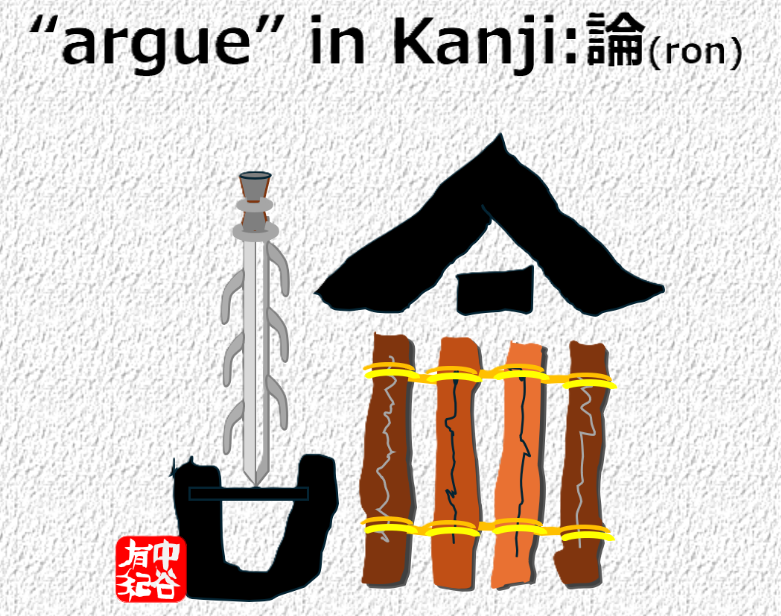
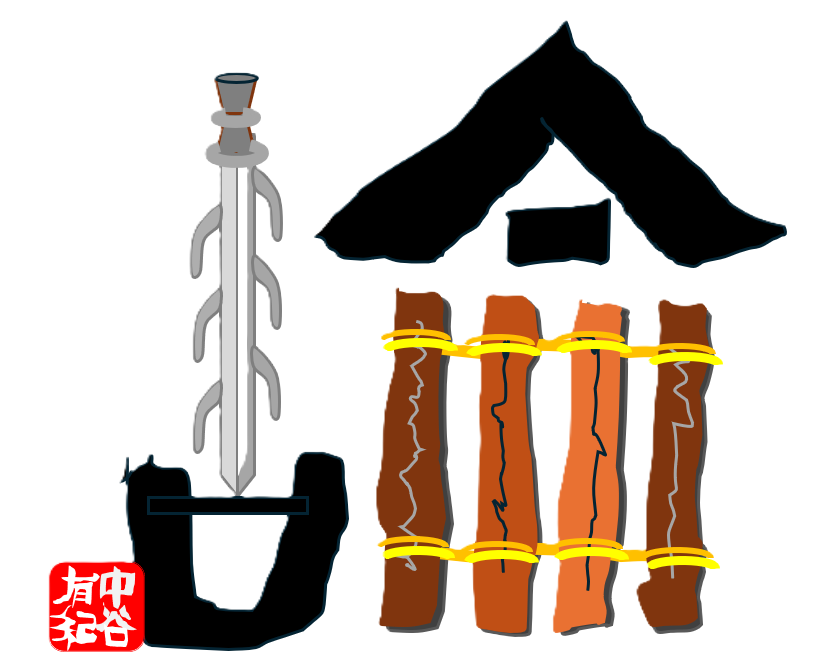
The kanji is composed of the radical for “speech” in the left,and elements representing a legal code written on wooden tablets in the right. This signifies explaining things to someone by following established rules and principles of the world. So this kanji means’argue’.


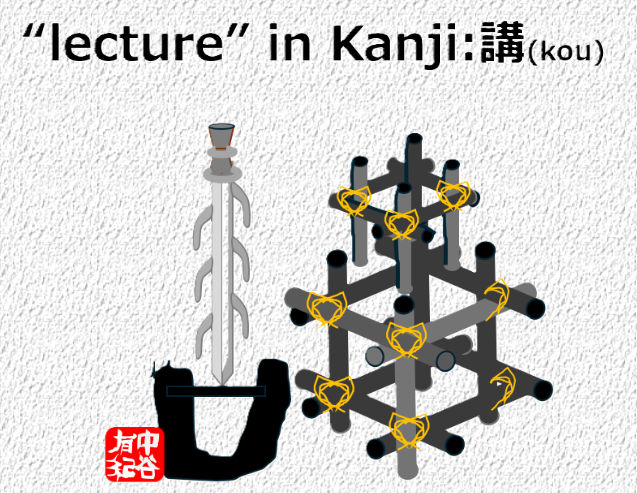
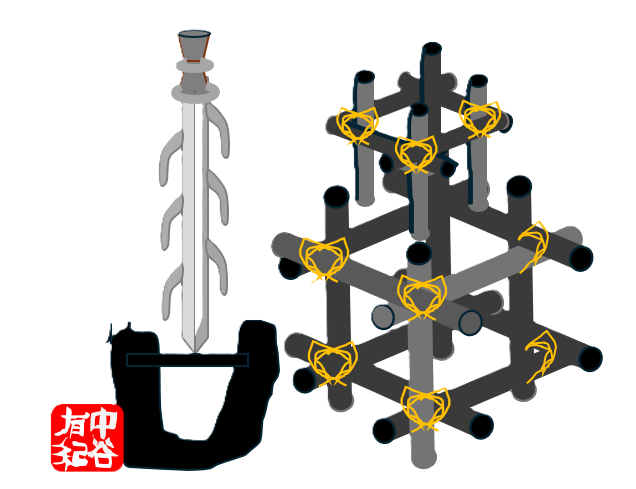
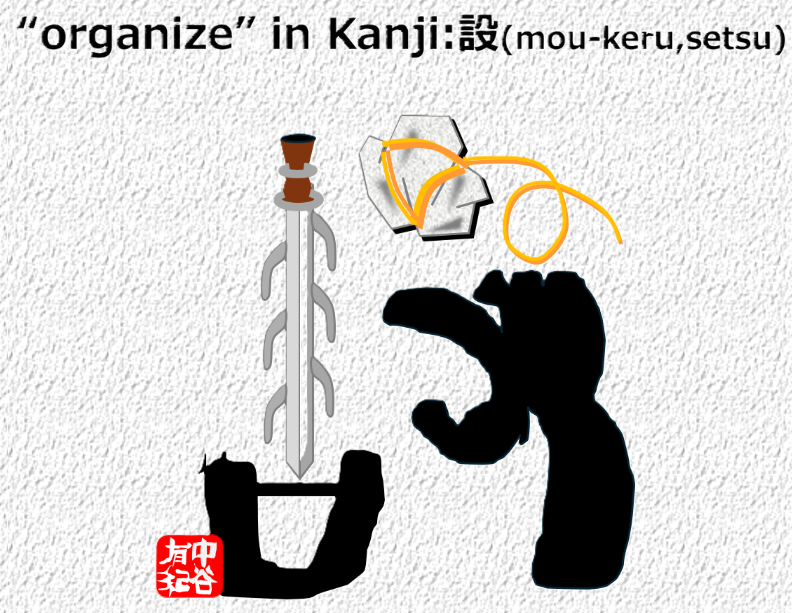
The left side of this kanji features ‘word,’ a symbol combining a sword and a mouth to represent a sacred promise to God. The right side represents a structured framework. Therefore, this kanji means ‘lecture’—speaking in detail using well-structured words.


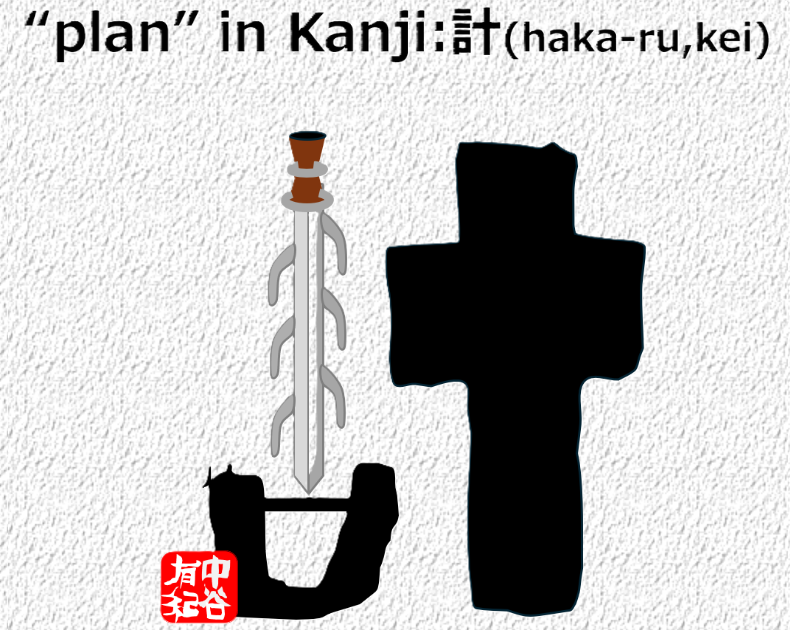
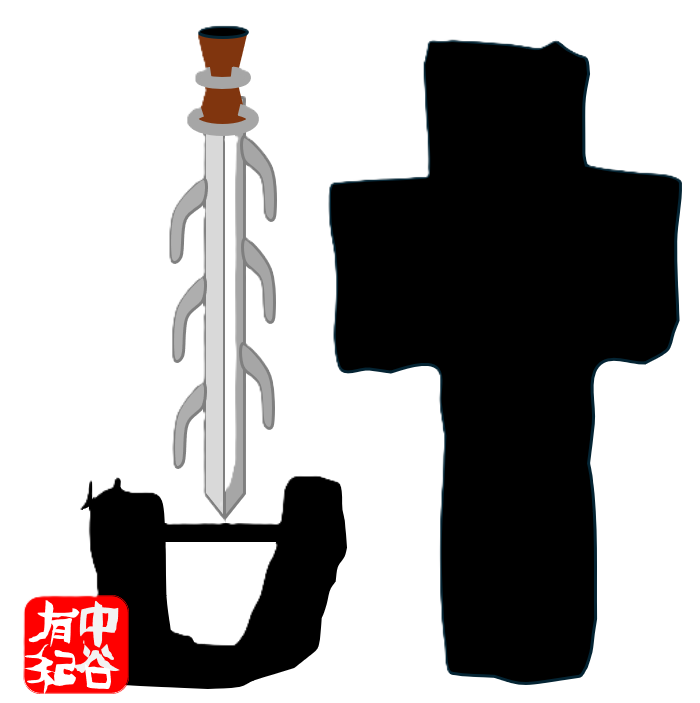
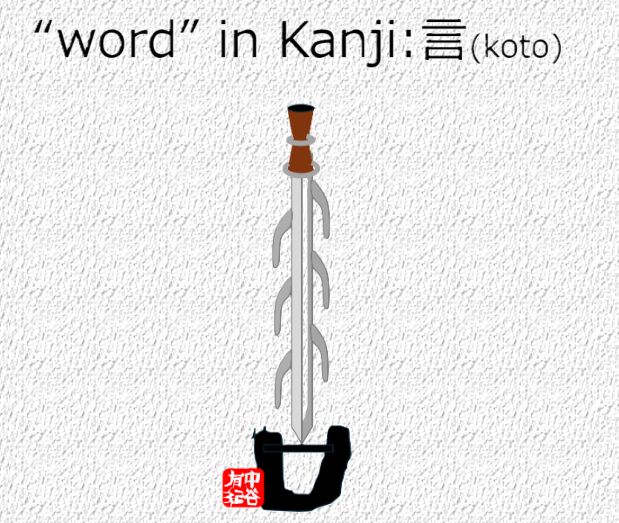
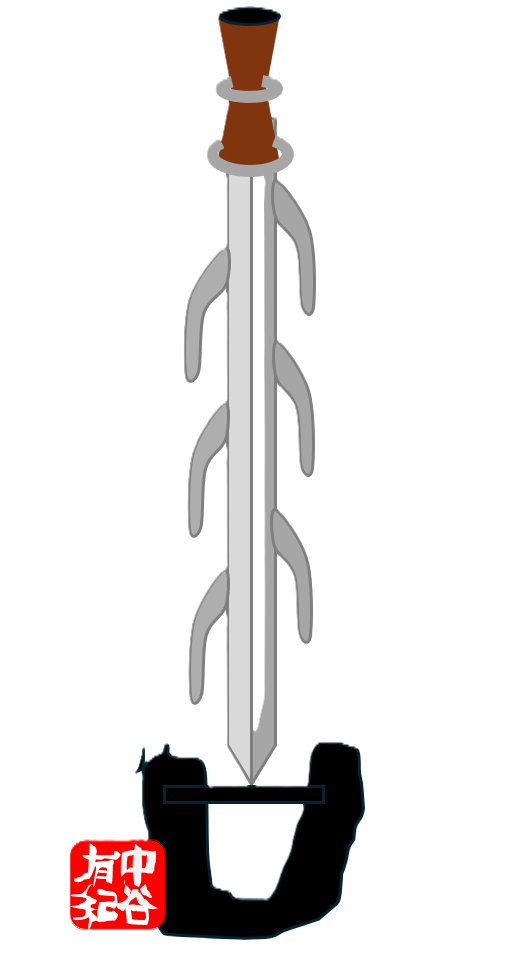
This kanji shows a sword and a mouth. It means, ‘I promise to God to tell the truth. If I break this promise, punish me with this sword.’ That is why this kanji represents ‘words’.