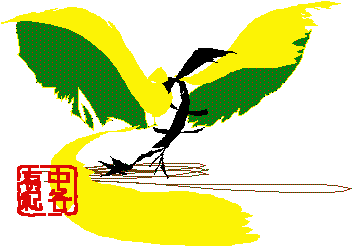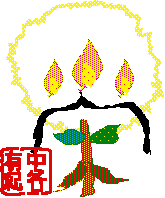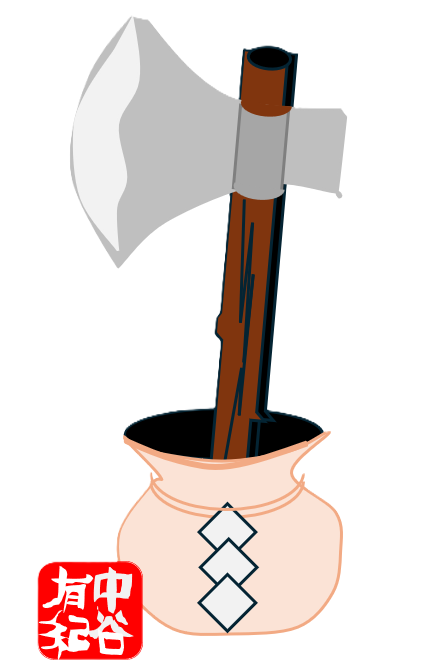
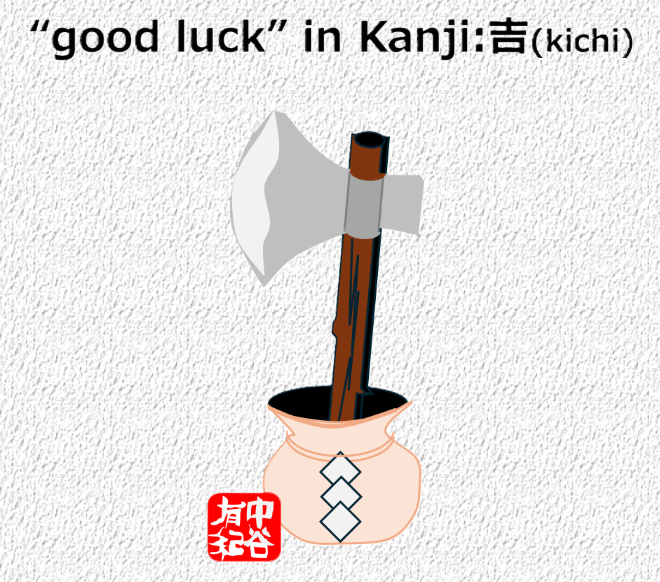
This kanji depicts weapons stored safely in a sacred box, symbolizing peace and a solemn promise after war. Because of this, it came to mean “good luck” or “auspicious.” You will often see this kanji on omikuji (fortune slips) at Japanese shrines.
The short story of Kanji pictures
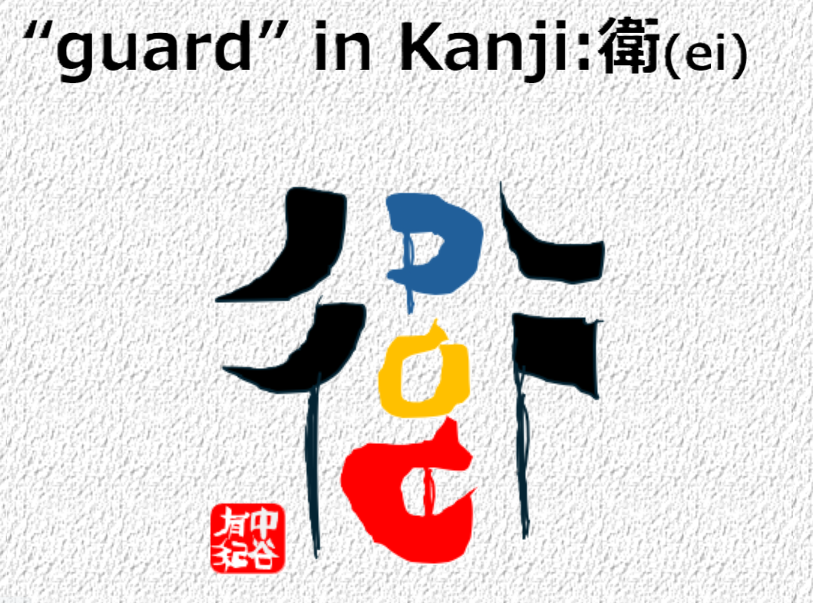

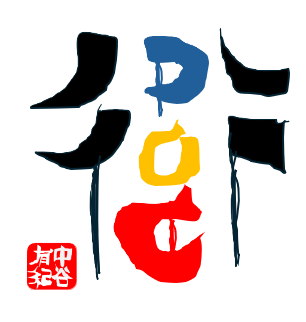
This kanji has two parts: the ‘go’ radical is divided, and inside it is a symbol for walking around a perimeter. That is why this kanji means ‘to guard’ or ‘to protect’ by patrolling the area.
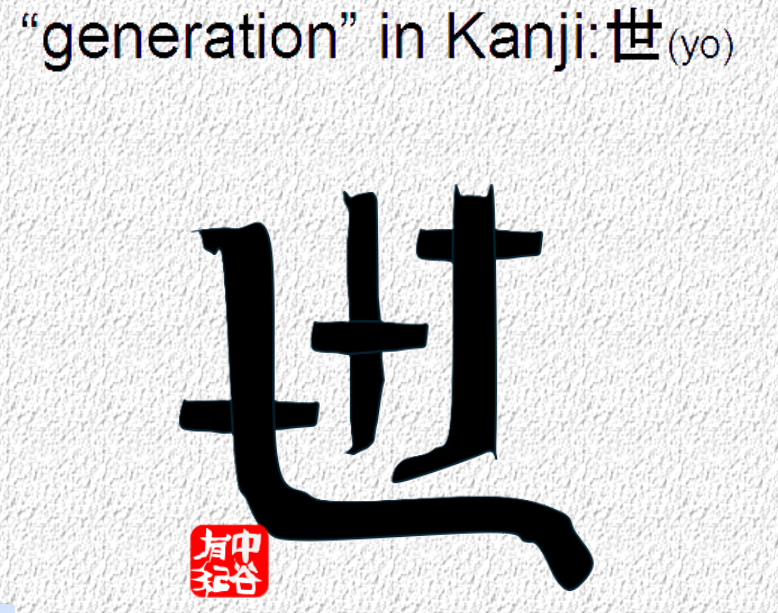

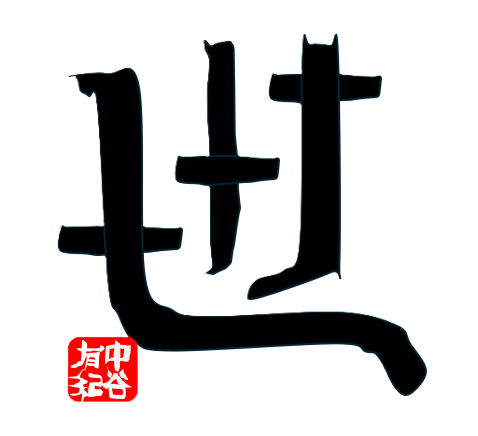
This figure combines three distinct marks”+” that represent the number ten. Therefore, this layout visually means ‘thirty’—and in ancient timing, thirty years defined exactly one generation!
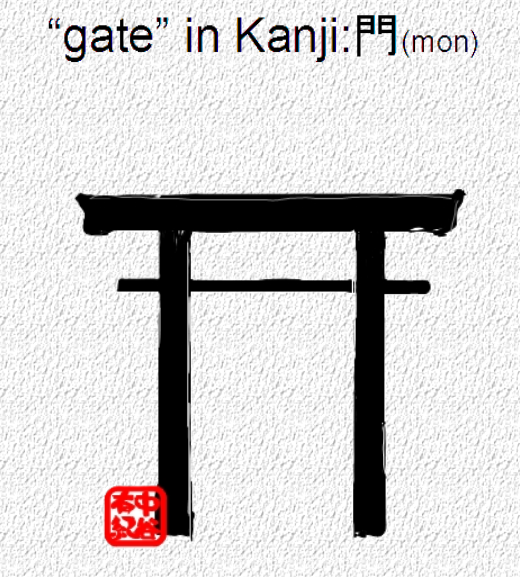
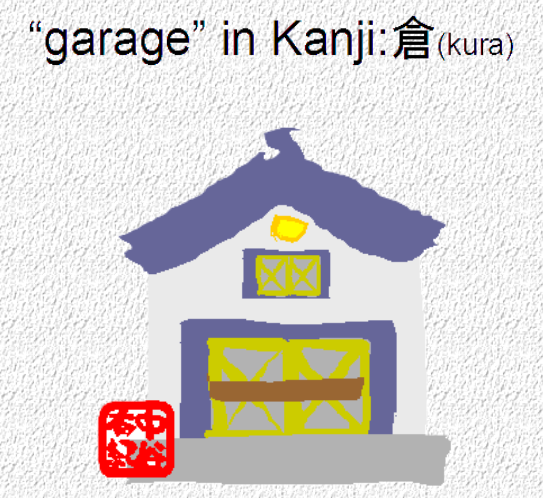
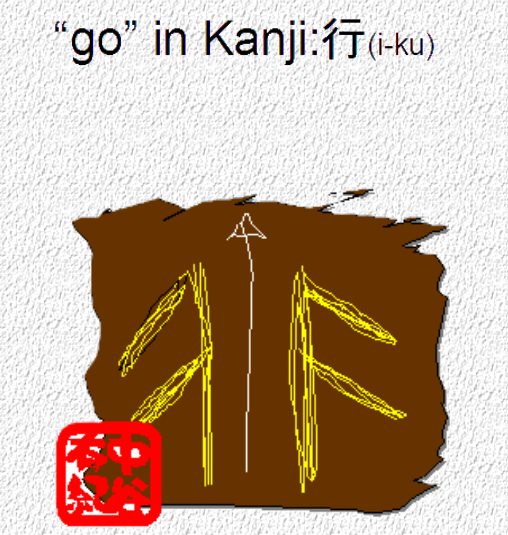

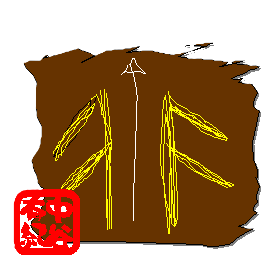
This is the exact kanji where that arrow takes you! It depicts a large, bustling crossroad where paths intersect. While the arrow showed you the direction, this kanji captures the real action of stepping out onto the road and shouting, ‘GO’!
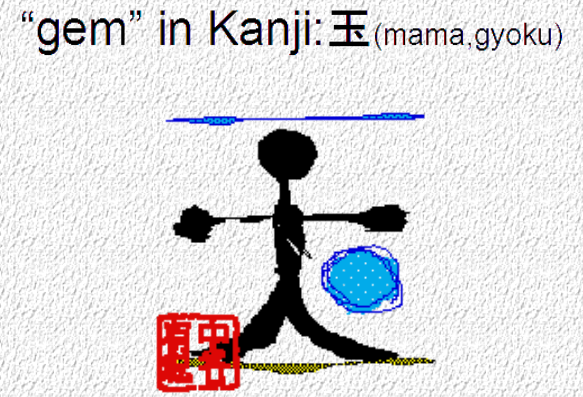
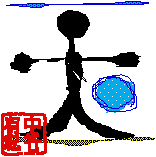
The basic shape of this kanji represents a ‘KING’ standing firmly on the land, holding a sparkling gem on his left side. In Japan, the emperor has held a sacred GEM as a symbol of power from ancient times to the present day. Therefore, this kanji means ‘GEM’ or ‘JEWEL’