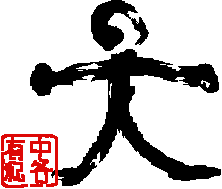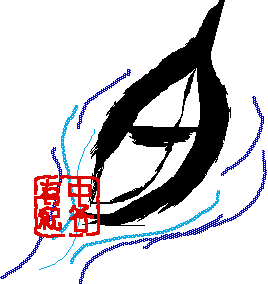
Ancient people saw daytime as the realm of humans and nighttime as the realm of God. In that unseen time, they listened for divine messages. This is why this character represents ‘DARKNESS.

The short story of Kanji pictures

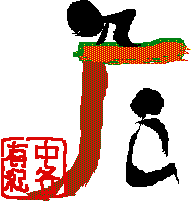
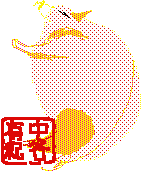
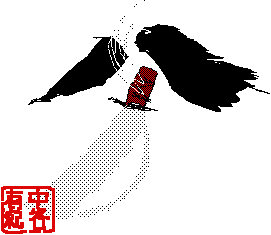
This kanji consists of two parts. First, you can see a person standing on the edge of a cliff. Second, there is a person sitting with their knees bent below. Together, both parts represent an unstable or dangerous situation.

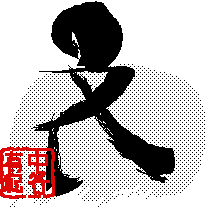
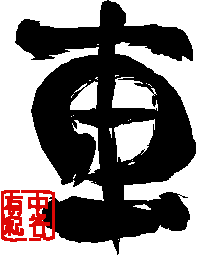
Here, you can see a person wearing a traditional Japanese garment called a KIMONO. Yes, this kanji means ‘CLOTHING’ in Japanese!

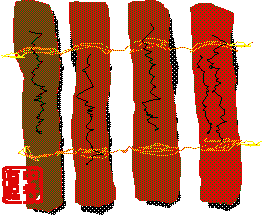
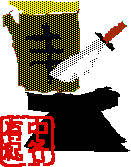
Long ago, before paper was invented, people in China and Japan wrote and read documents using wooden tablets tied together with ropes. This is why, even today, this kanji means ‘BOOK’ or ‘NOTE’ in Japanese.